
How Designers Use IKEA Kitchen Cabinets
There's a persistent belief in home design that a beautiful kitchen requires a custom budget. That unless you're spending six figures on cabinetry, the result will always feel like a compromise. But look closely at how designers use IKEA kitchen cabinets — in projects published in Architectural Digest, documented in design books, photographed for the most referenced rooms of the last decade — and a different story emerges.
Many of them share the same quiet foundation: IKEA cabinet boxes.
Not as a placeholder until the budget allows for something better. Not as a compromise hidden behind expensive finishes. As a deliberate choice made by designers who understand where investment matters most.
This is the first installment of an ongoing series exploring how designers actually use IKEA. Not the IKEA of starter apartments and temporary solutions, but the IKEA that appears in thoughtfully designed homes where every decision has been considered.
We're starting in the kitchen because it's often the largest line item in a renovation budget — and one of the places where strategic decisions can have the greatest impact.
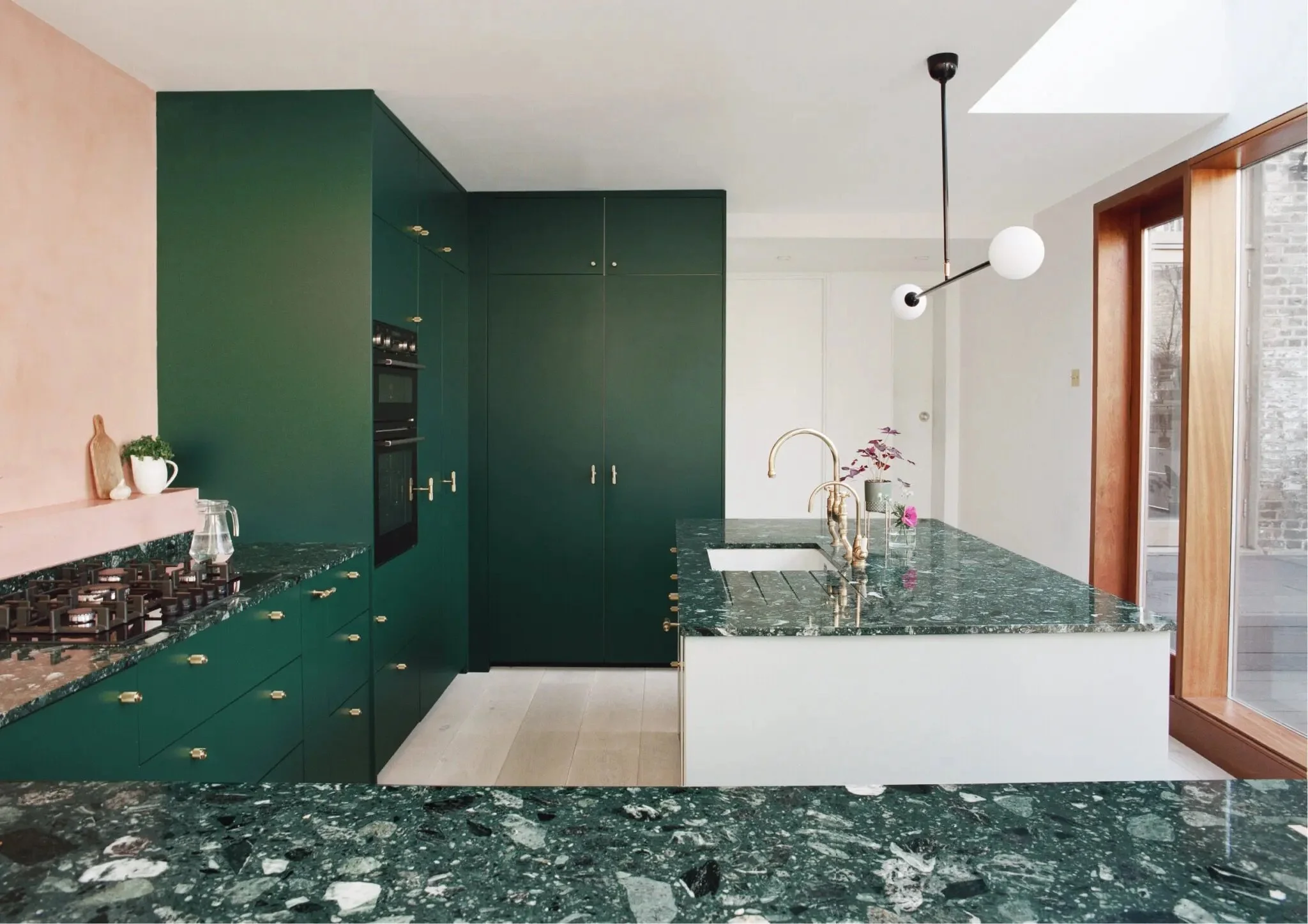
The finished kitchen in Anna Drakes' Kentish Town project using IKEA cabinet boxes.
Anna Drakes / Space A
Kentish Town, London
For decades, British sculptor Astrid Zydower inhabited a grand Victorian townhouse in north London, filling it with kitschy objects, creative friends, and bohemian energy. After she died in 2005, the house slowly lost that spirit. By the time a fashion editor purchased it years later, it needed more than a refresh — it needed to be restored to life.
Architect Anna Drakes, founder of London-based design firm Space A, was brought in to do exactly that. The kitchen and dining extension was the most compromised space: cold patio tiles, a mouse-friendly raised platform, and all the warmth of a waiting room. Anna rebuilt it entirely — 34 square meters (~366 square feet), £40,000 budget (US $54,ooo) — and the result is unlike anything I've seen on AD recently.
The foundation is IKEA, with custom MDF fronts, sprayed in Puck by Little Greene — a strong green. "The cupboards were sprayed in this custom shade that we picked really specifically," Anna explains. "We wanted to do something bold." Against those fronts: Diespeker & Co. Conglomerate Marble countertops in a rich, veined green. Buster + Punch hardware. A deVOL brass faucet. Tadelakt polished plaster walls. Lighting arranged in the shape of the Leo constellation, Astrid's star sign.
Architectural Digest described the IKEA cabinet bases as the project's "sneakiest save" and the marble countertops as the "most bonkers splurge." By using IKEA cabinet boxes as the base, the designer was able to splurge on an extravagant countertop.
Here, the IKEA box is infrastructure. The marble, the hardware, the paint color chosen with obsessive specificity: that's where the design lives.
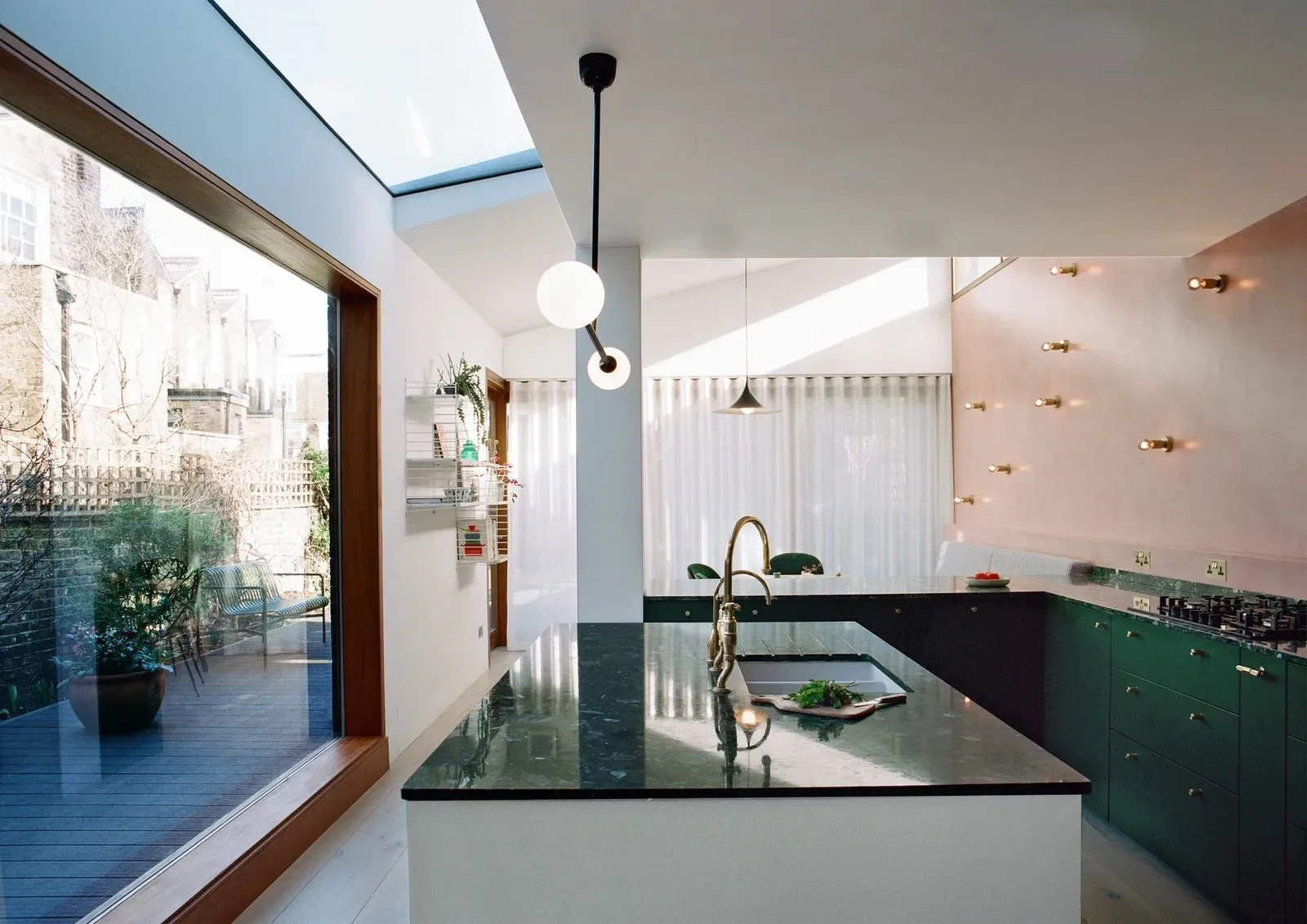
The deep green cabinet fronts are custom MDF doors painted Puck by Little Greene.
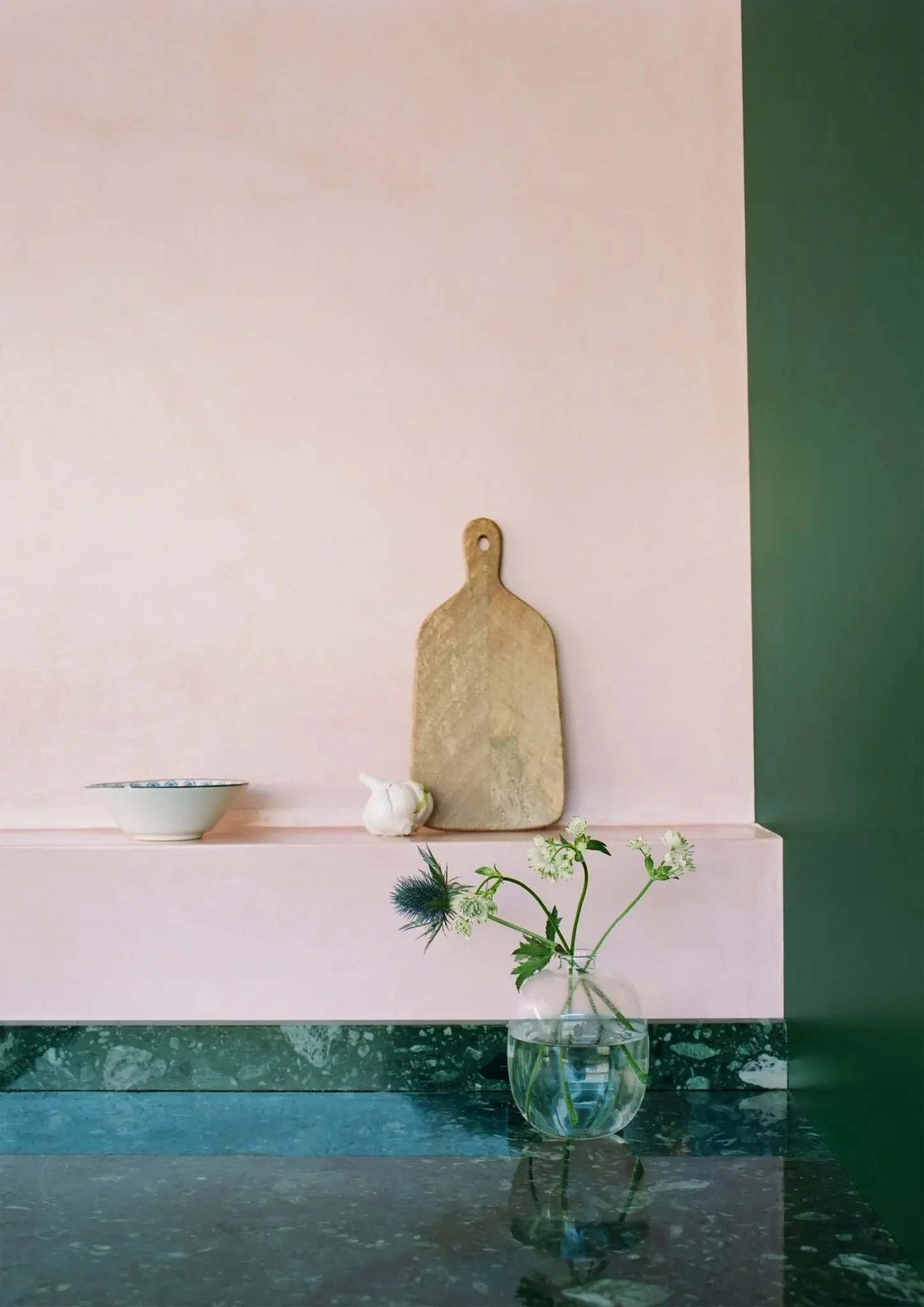
The walls are finished in Tadelakt — a traditional Moroccan polished plaster technique
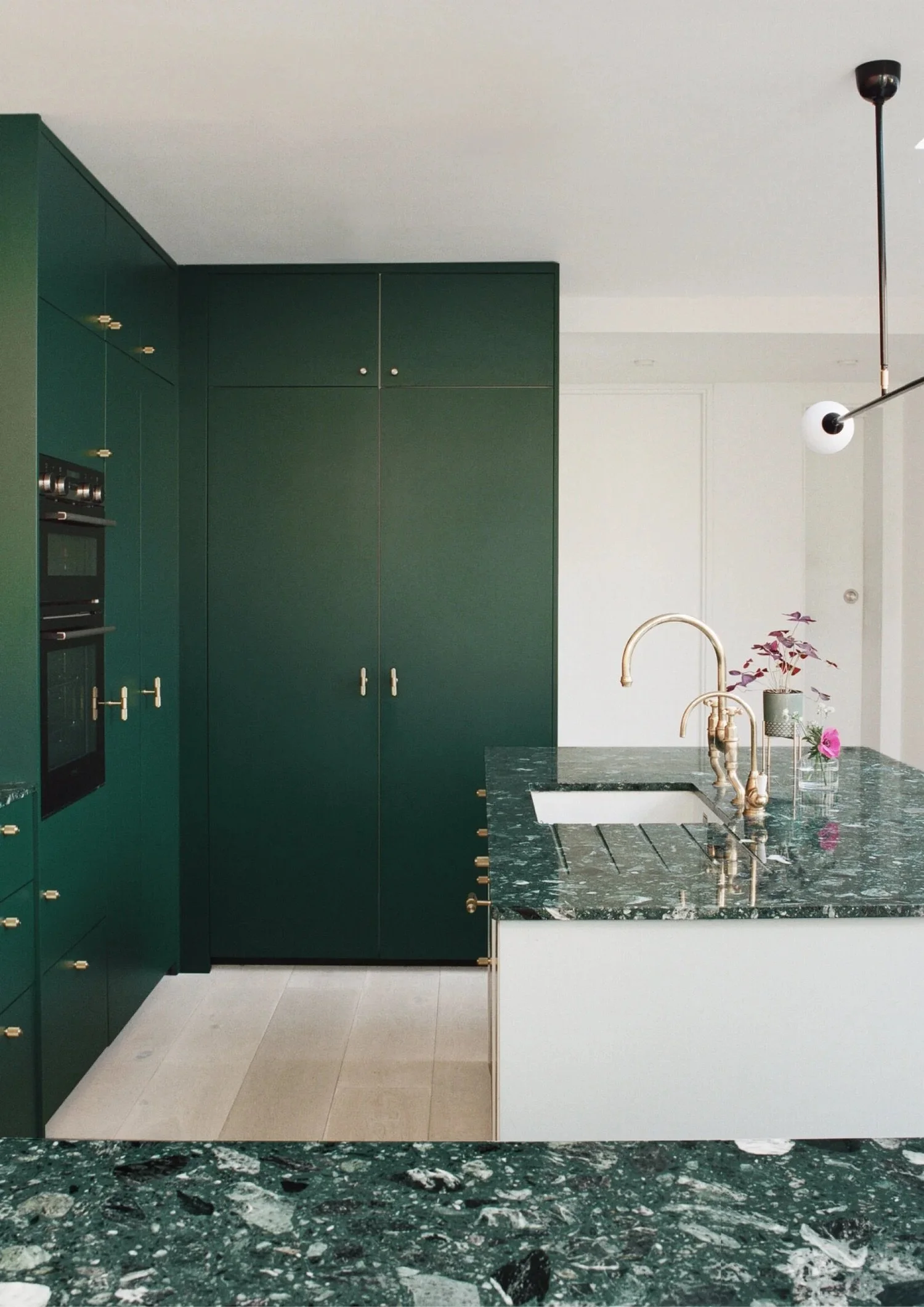
Diespeker & Co. Conglomerate Marble — the deliberate extravagance that makes the IKEA bases disappear.
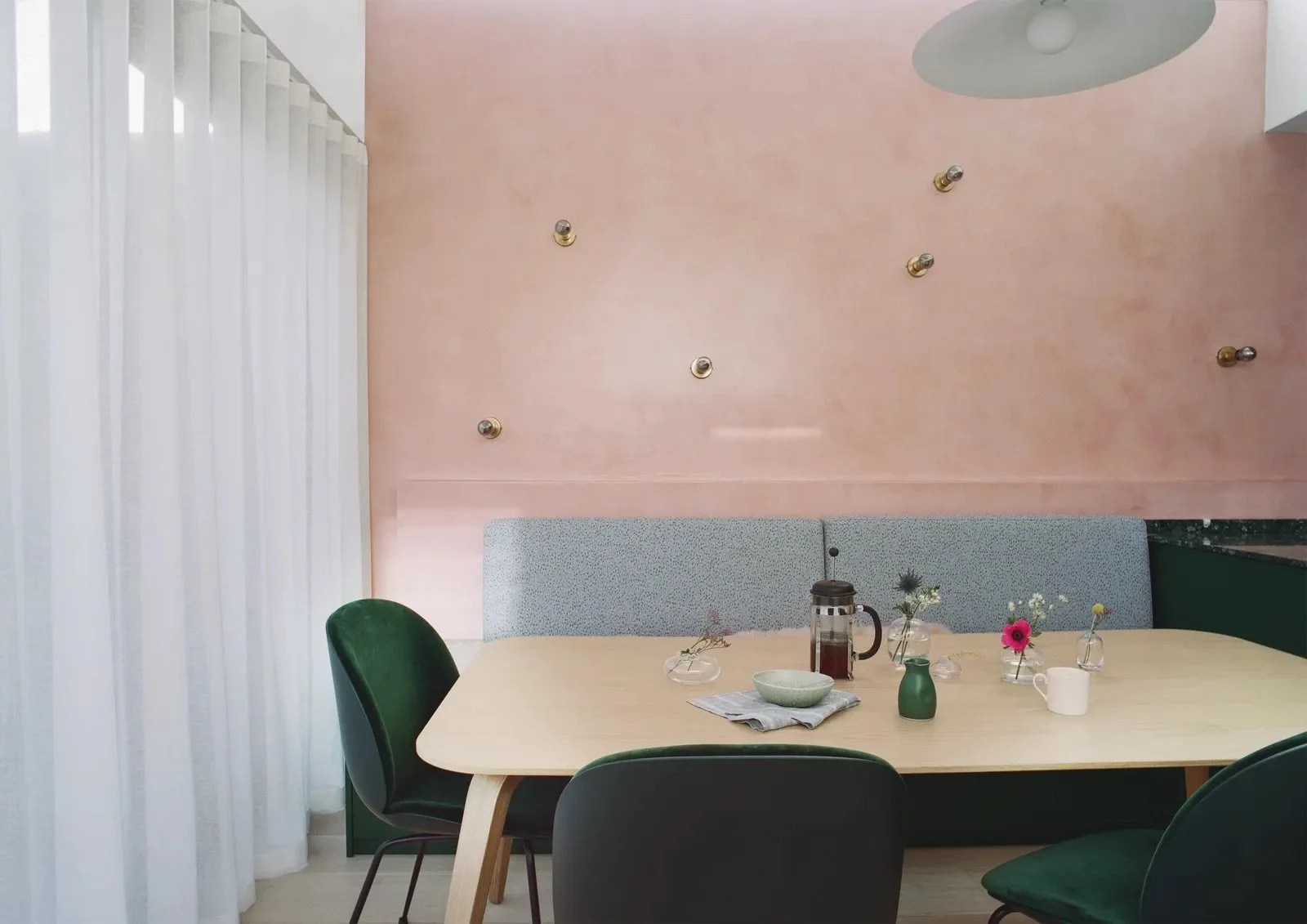
Sconces arranged in the shape of the Leo constellation — Astrid Zydower's star sign. The kind of detail that turns a kitchen into a story.
Photography: Harry Crowder
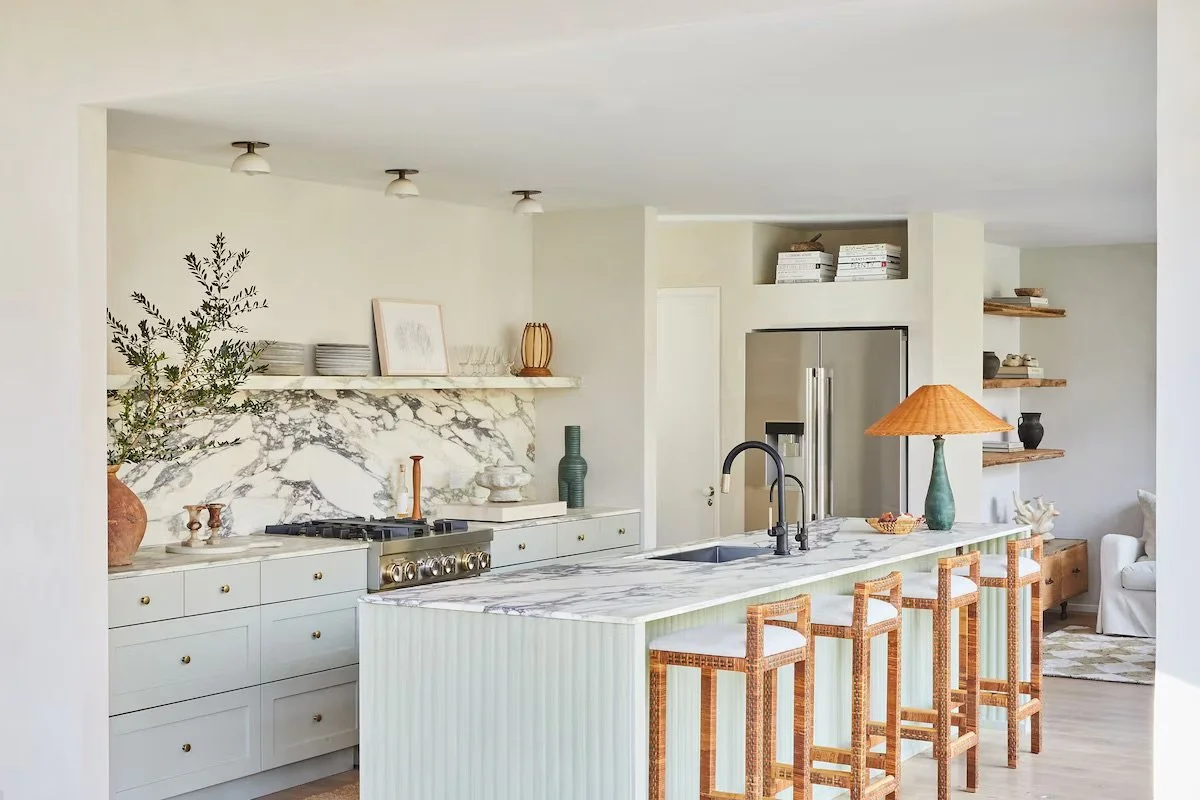
Athena Calderone's Amagansett kitchen — IKEA cabinet boxes, Semihandmade fronts painted Farrow & Ball Ash Grey
Athena Calderone/ EyeSwoon
Amagansett, New York
Athena Calderone has spent more than a decade building EyeSwoon into one of the most trusted design voices in the space — not by following trends, but by developing a point of view so specific it's become a reference point for others. Her homes have been the subject of countless saved screenshots and Pinterest boards, not because they feel aspirational in an unattainable way, but because they feel genuinely lived in. Calderone doesn't decorate. She layers — stone against plaster, vintage against new, the humble against the luxurious.
Which makes her Amagansett kitchen an example of how the art of the mix is truly an art form in itself.
IKEA forms the foundation. The fronts are Semihandmade DIY Shaker panels, painted Farrow & Ball Ash Grey — a soft green-grey that Calderone also carried onto the fluted plaster kitchen island by Kamp Studios. The countertops and backsplash are a single, richly veined slab of Calacatta Monet marble from ABC Stone. Hardware by Optimum Brasses, designed to patina over time.
She and her husband installed the Semihandmade fronts themselves. "My husband and I demoed ourselves," she said. "We then installed Semihandmade fronts and painted them, which is the greatest choice if you want a refined, custom look within a restrained budget."
What makes this kitchen extraordinary isn't the marble — though the marble is extraordinary. It's the proportion of the investment. The cabinet boxes are invisible. The stone, the plaster, the hardware that will change character over years of use: that's where every dollar went, and that's what you see.
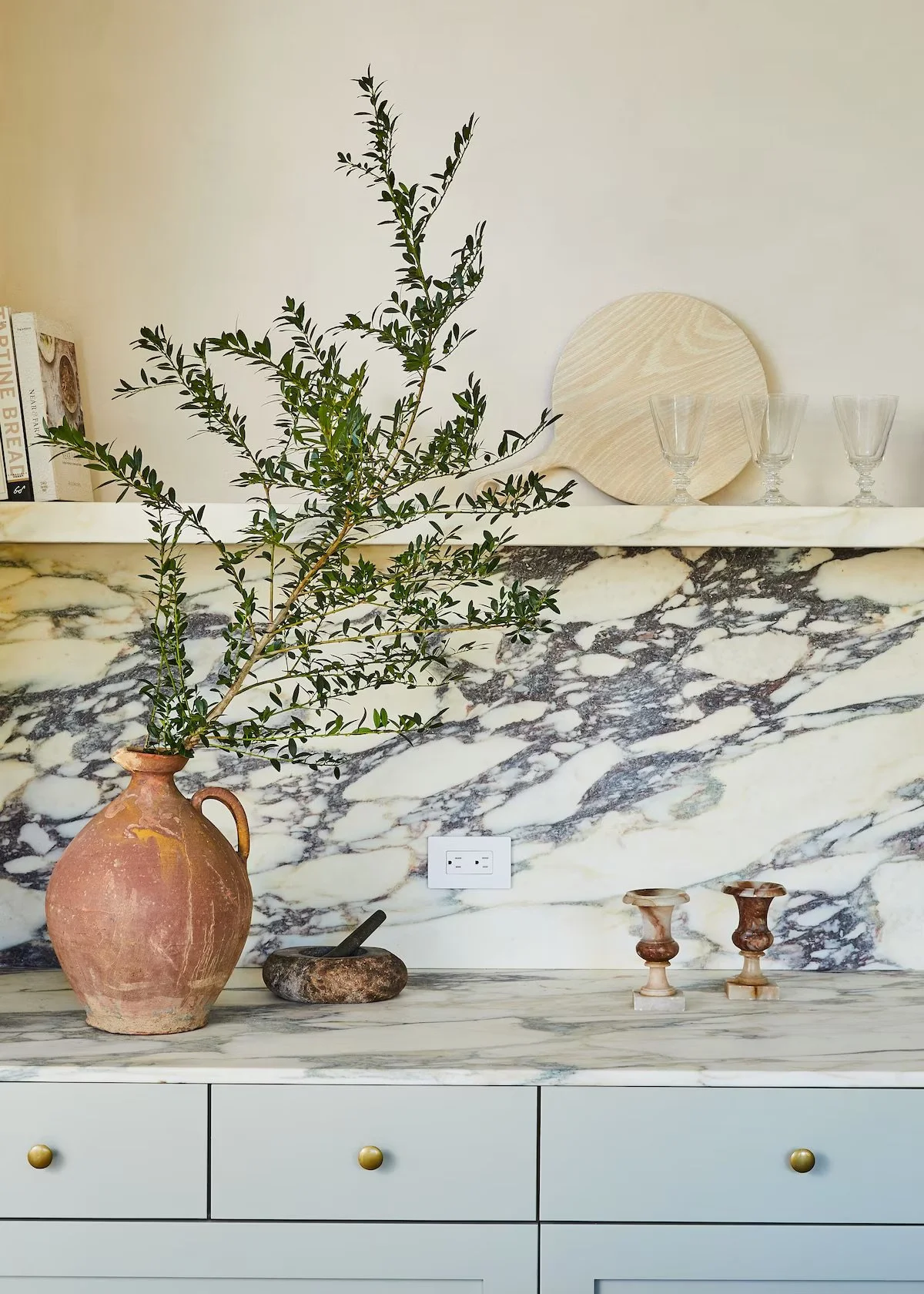
Hardware by Optimum Brasses — chosen specifically to patina over time.
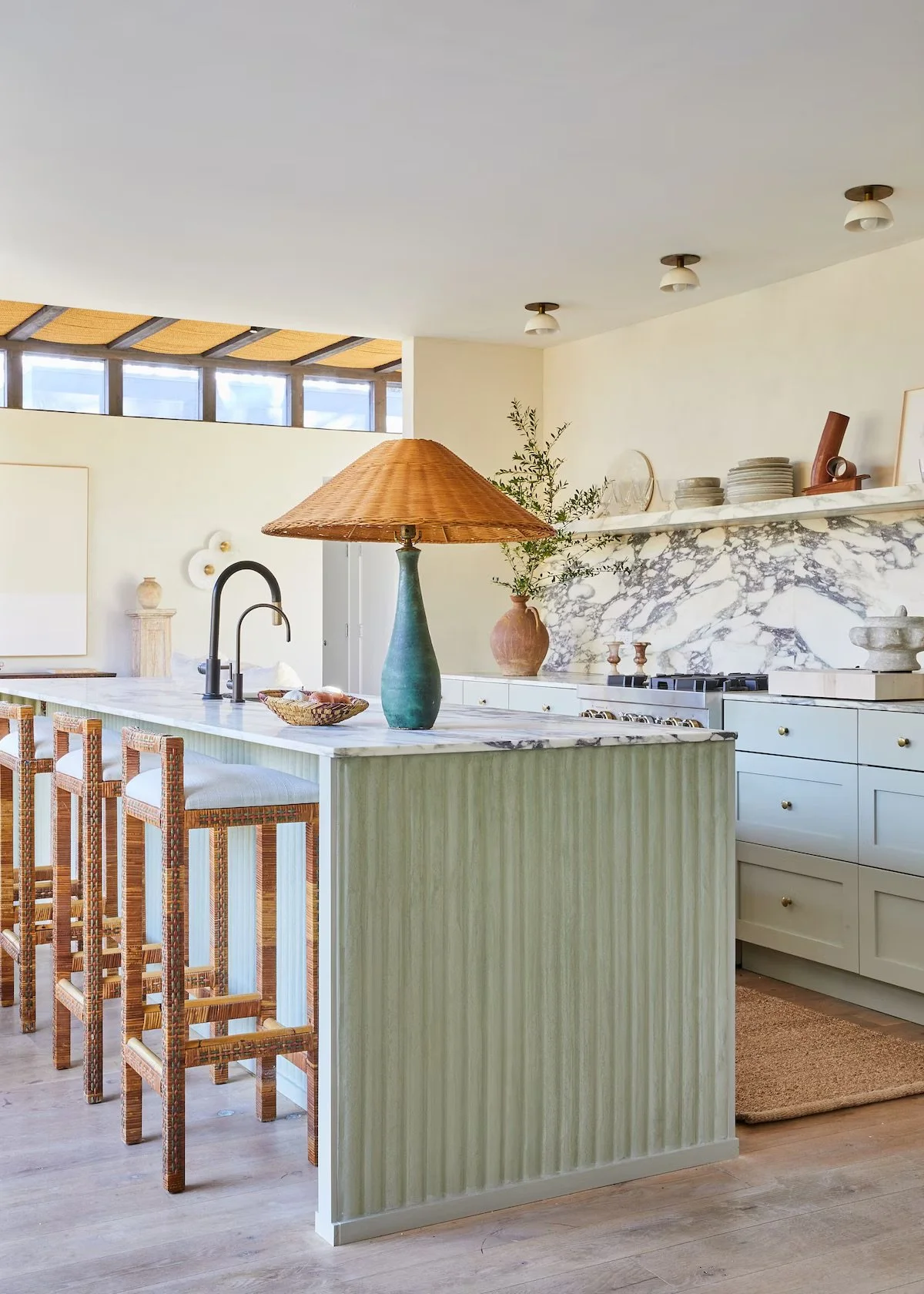
The fluted plaster island by Kamp Studios.
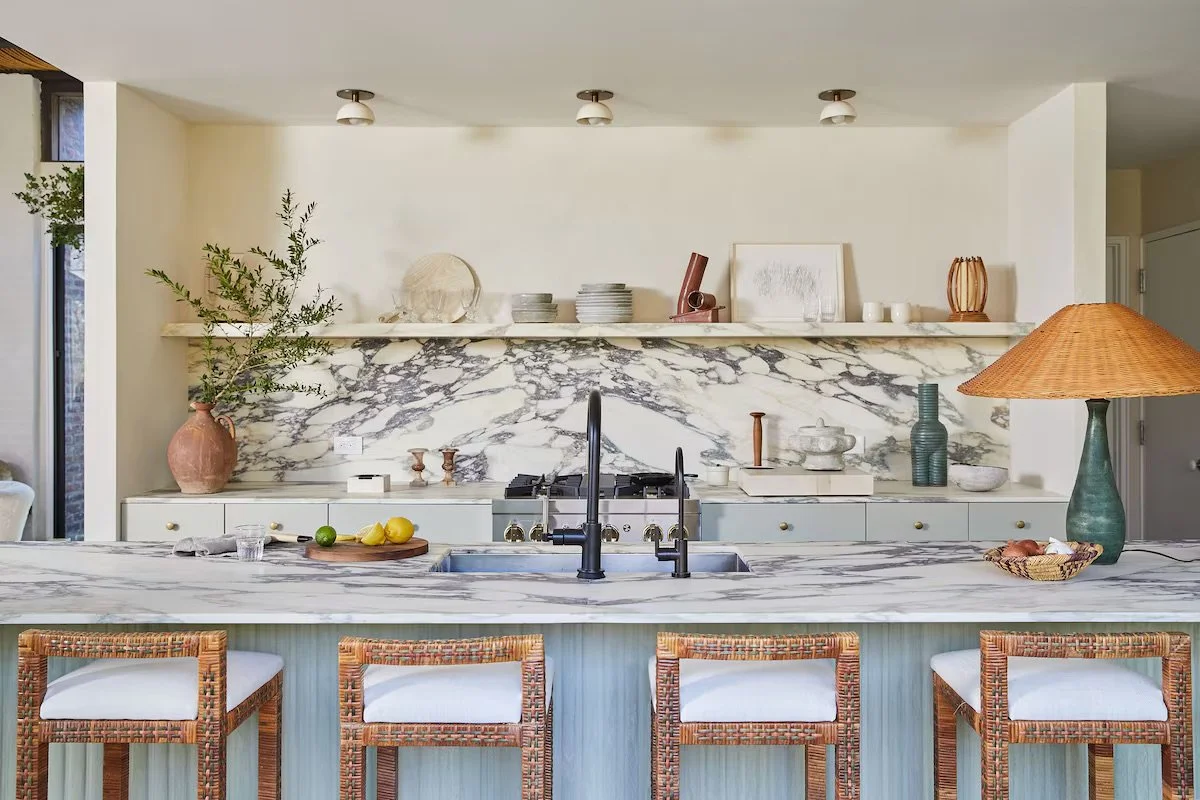
A continuous slab of Calacatta Monet marble from ABC Stone and fabricated by C&B Marble Corp.
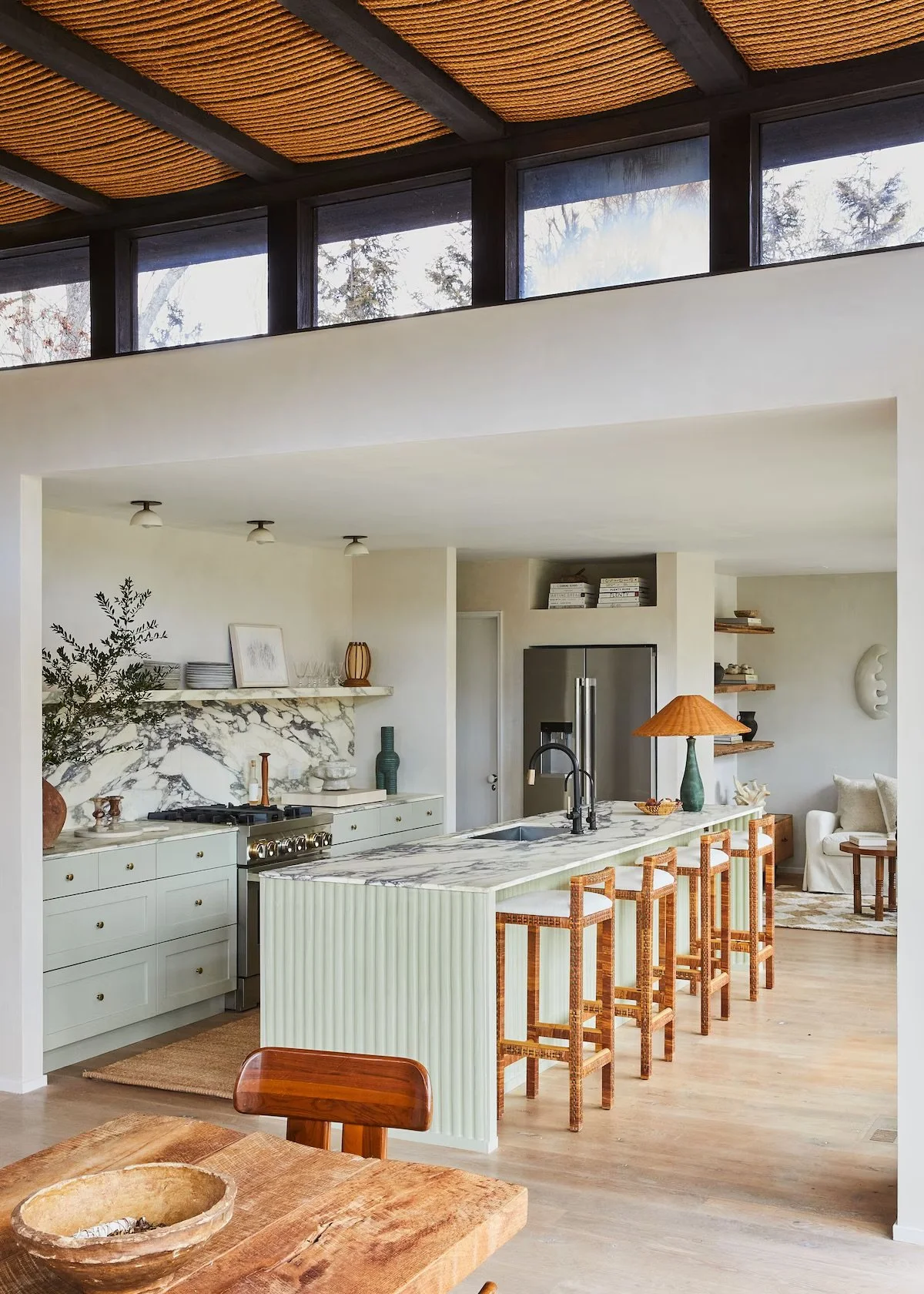
“The greatest choice if you want a refined, custom look within a restrained budget.” —Athena Calderone (on Semihandmade doors)
Photography: Nicole Franzen
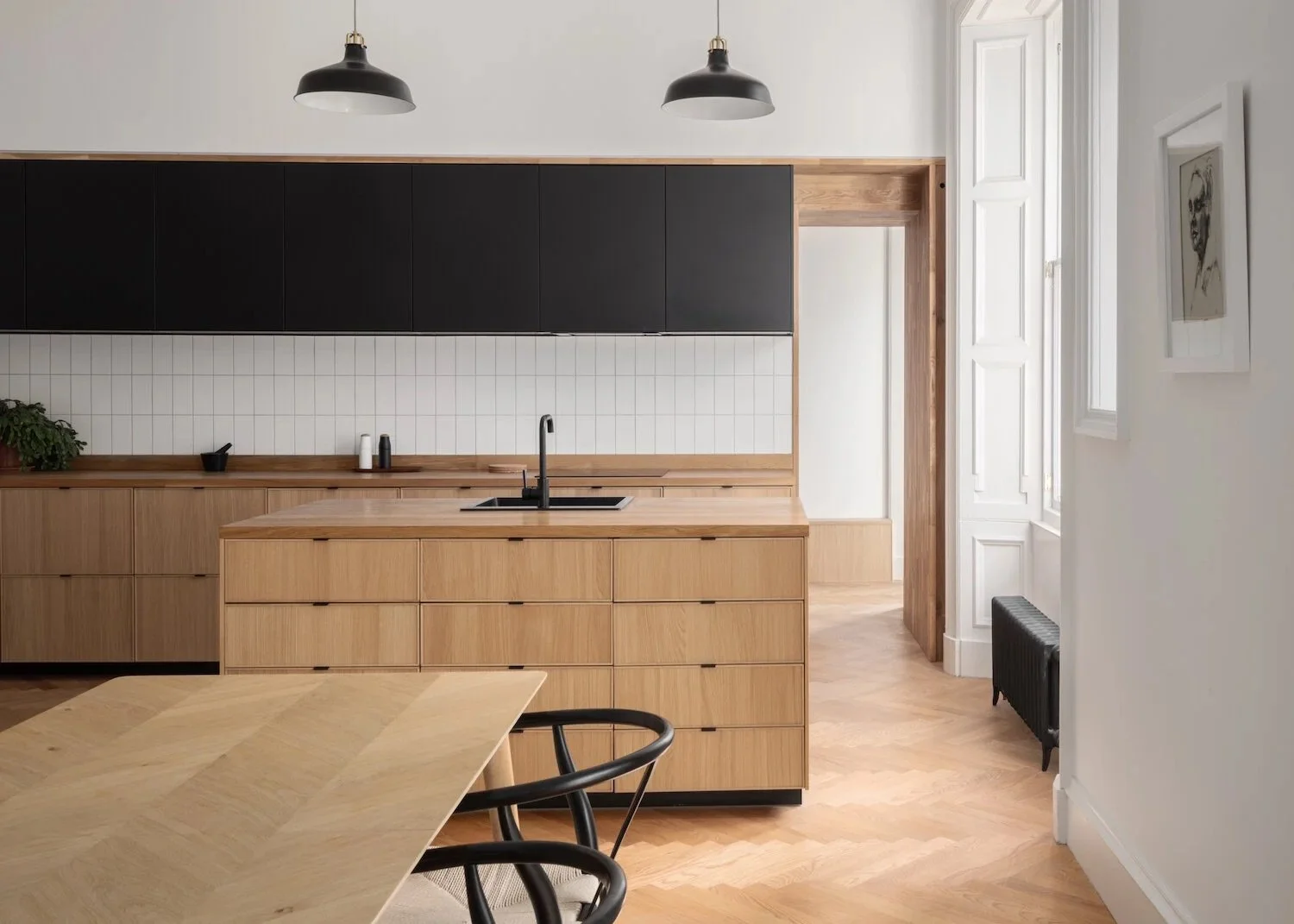
Luke McClelland's Edinburgh kitchen designed with IKEA cabinet boxes and doors.
Luke McClelland / McClelland Design
Stockbridge, Edinburgh
Luke McClelland is an Edinburgh-based architect at McClelland Design who creates high-end kitchens for clients—the kind with generous budgets and few constraints. When it came time to renovate his own home, he had a fraction of what he was accustomed to working with. Rather than compromise on the result, he became deliberate about where the money went.
For this project, McClelland used IKEA cabinet boxes and doors. He wrapped the cabinetry in a stud bulkhead so it reads as recessed into the wall, giving it the presence of a custom installation. Matte black and oak veneer fronts are arranged in a deliberate rhythm, Scandinavian in its restraint. Full-stave oak countertops run continuously around the room, framing the doorway and upper cabinets and tying the entire composition together. The walls are painted in Farrow & Ball All White.
McClelland has noted that people often assume the doors are custom. What transforms the kitchen isn't luxury materials alone, but architectural thinking: how elements are positioned, proportioned, and detailed.
That's the lesson his kitchen illustrates so clearly. He didn't elevate the space by hiding that it was IKEA. He elevated it by understanding that good design isn't defined by what something costs, but by how thoughtfully it's used.
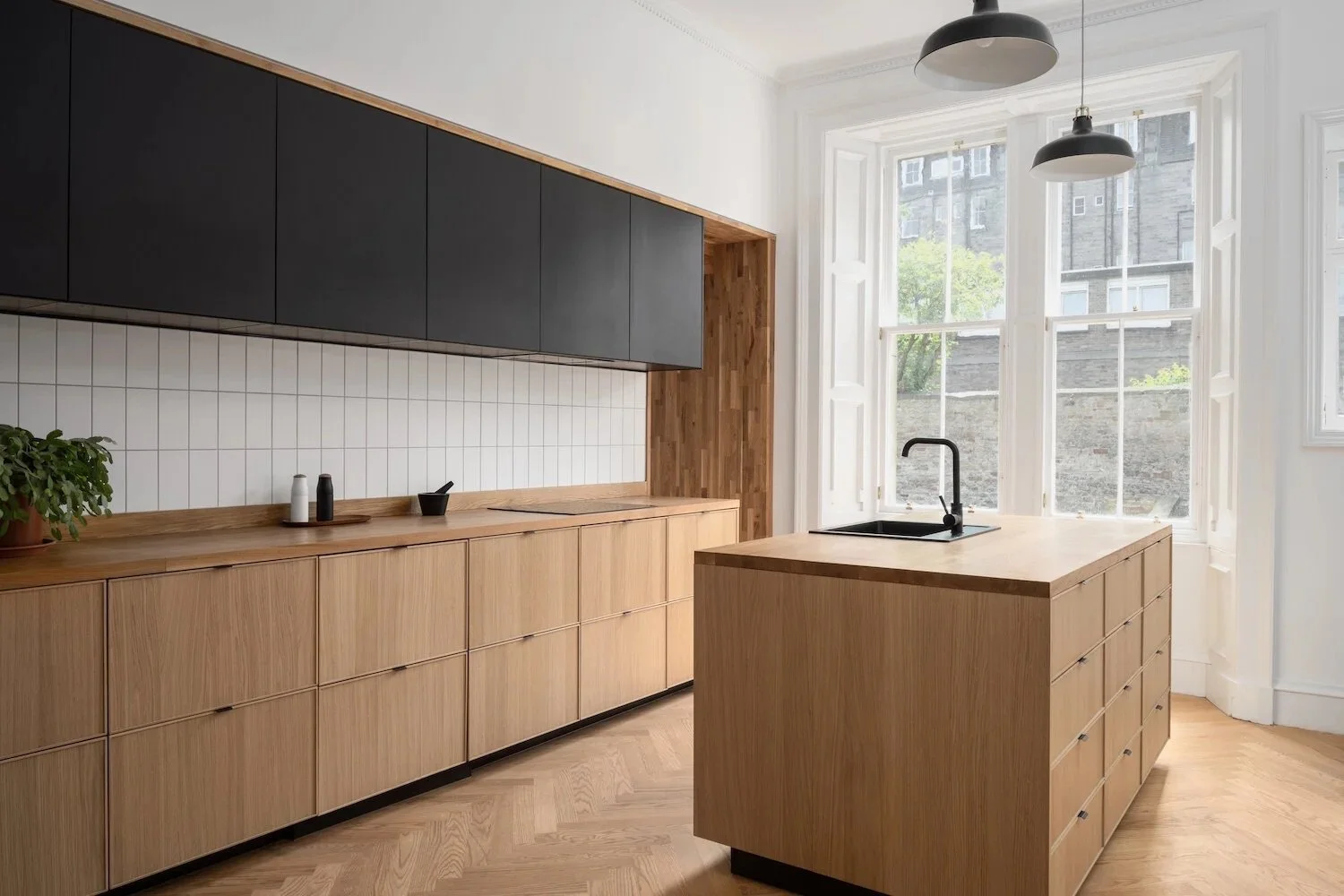
Encasing the IKEA cabinetry in a stud bulkhead gives it the weight and permanence of a fully custom installation.
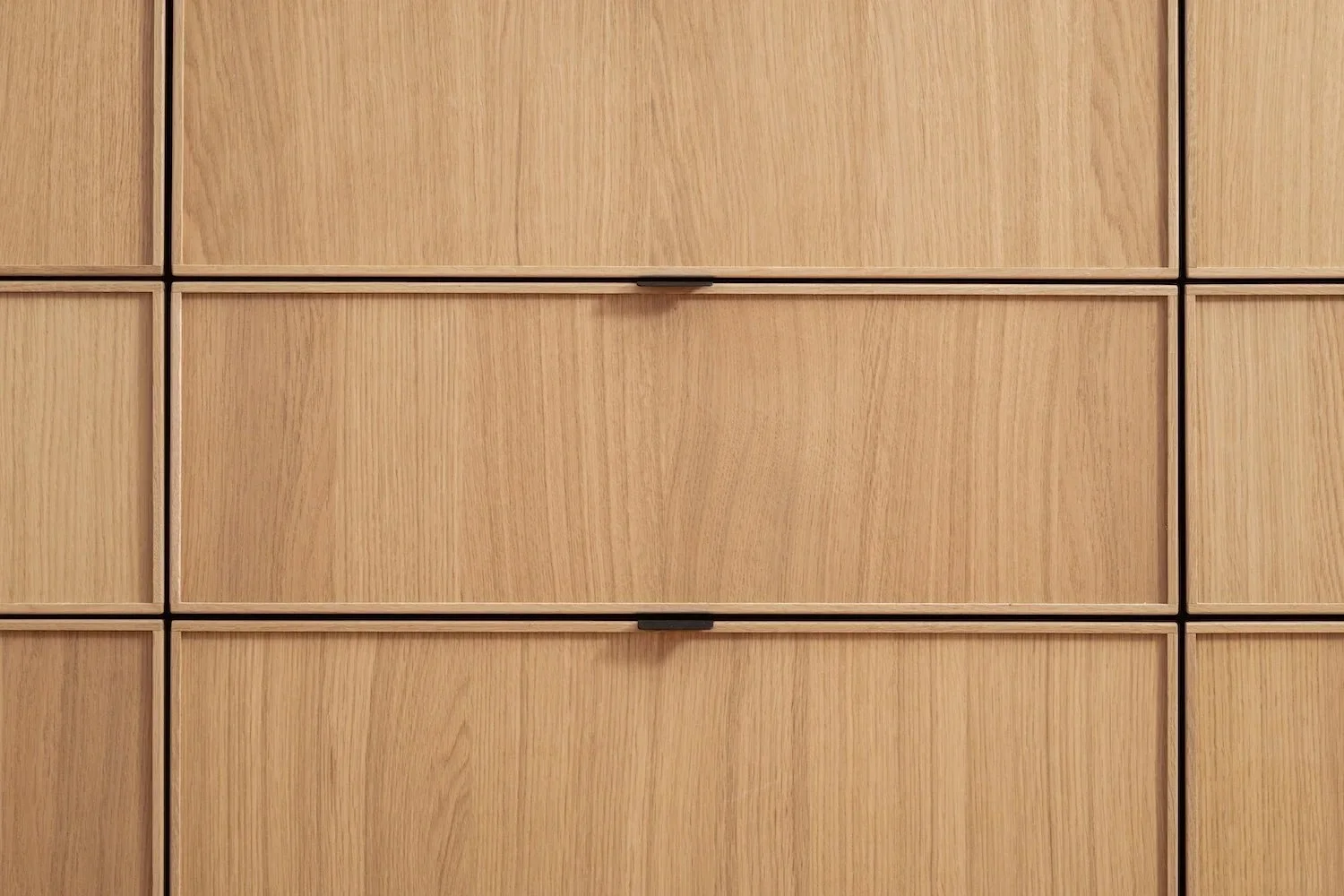
The black aluminum pulls are from The Handle Studio.
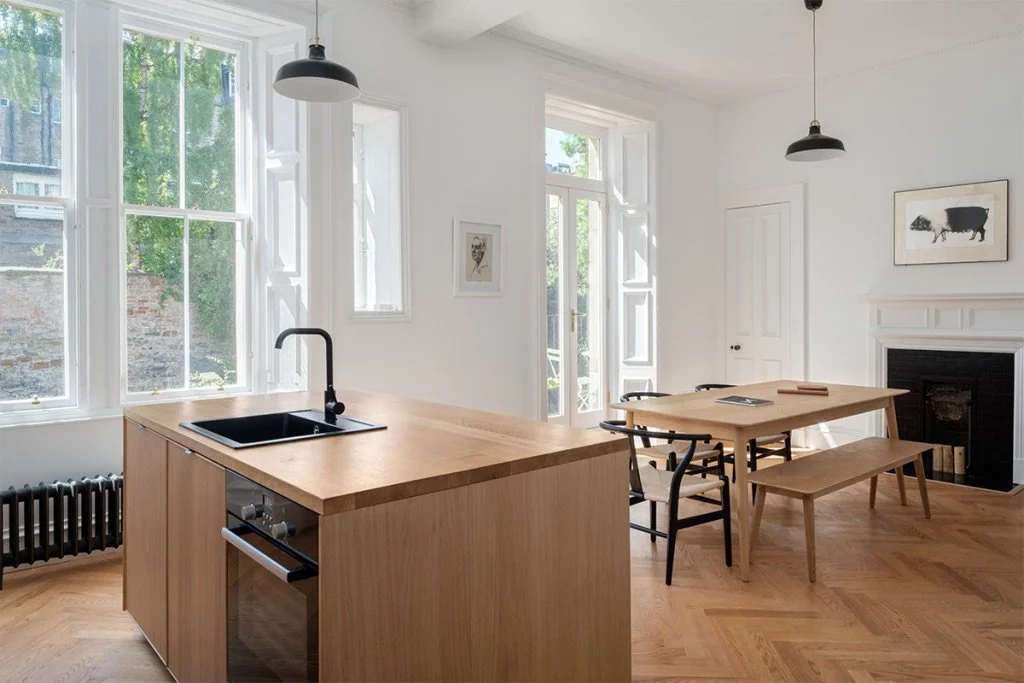
Full stave oak countertops run throughout — the detail that unifies the entire space. “There’s an argument that timber is more durable than stone because you can give it a light sand and it looks as good as new again.” — Luke McClelland
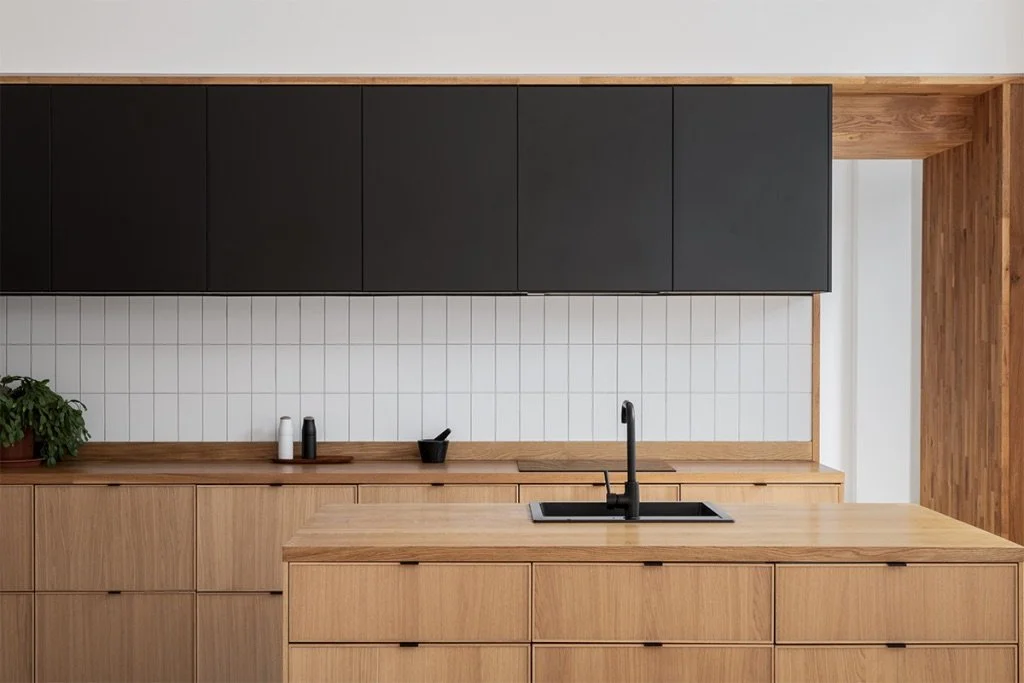
Matte black and oak veneer fronts in a deliberate, repeating pattern. Cohesive, restrained, Scandinavian in spirit.
Photography by ZAC and ZAC
What These Kitchens Have in Common
None of these designers treated the cabinet box as the design decision. They treated it as infrastructure and spent their budgets on the elements that actually shape how a kitchen feels: the stone, the hardware, the paint color, the proportions, the architectural detailing.
Good design isn't about where you save. It's about knowing where to spend.
The lesson isn't that every kitchen should start with IKEA. It's that beautiful kitchens are built from a series of thoughtful decisions. And when budgets are limited—as they almost always are—it's worth asking which elements will have the greatest impact on the finished space.
Sources: Architectural Digest (Anna Drakes / Space A); Semihandmade Stories / Architectural Digest (Athena Calderone); Architectural Digest / Remodelista (Luke McClelland)