How to Turn a Cabinet Gap Into Hidden Pull-Out Storage
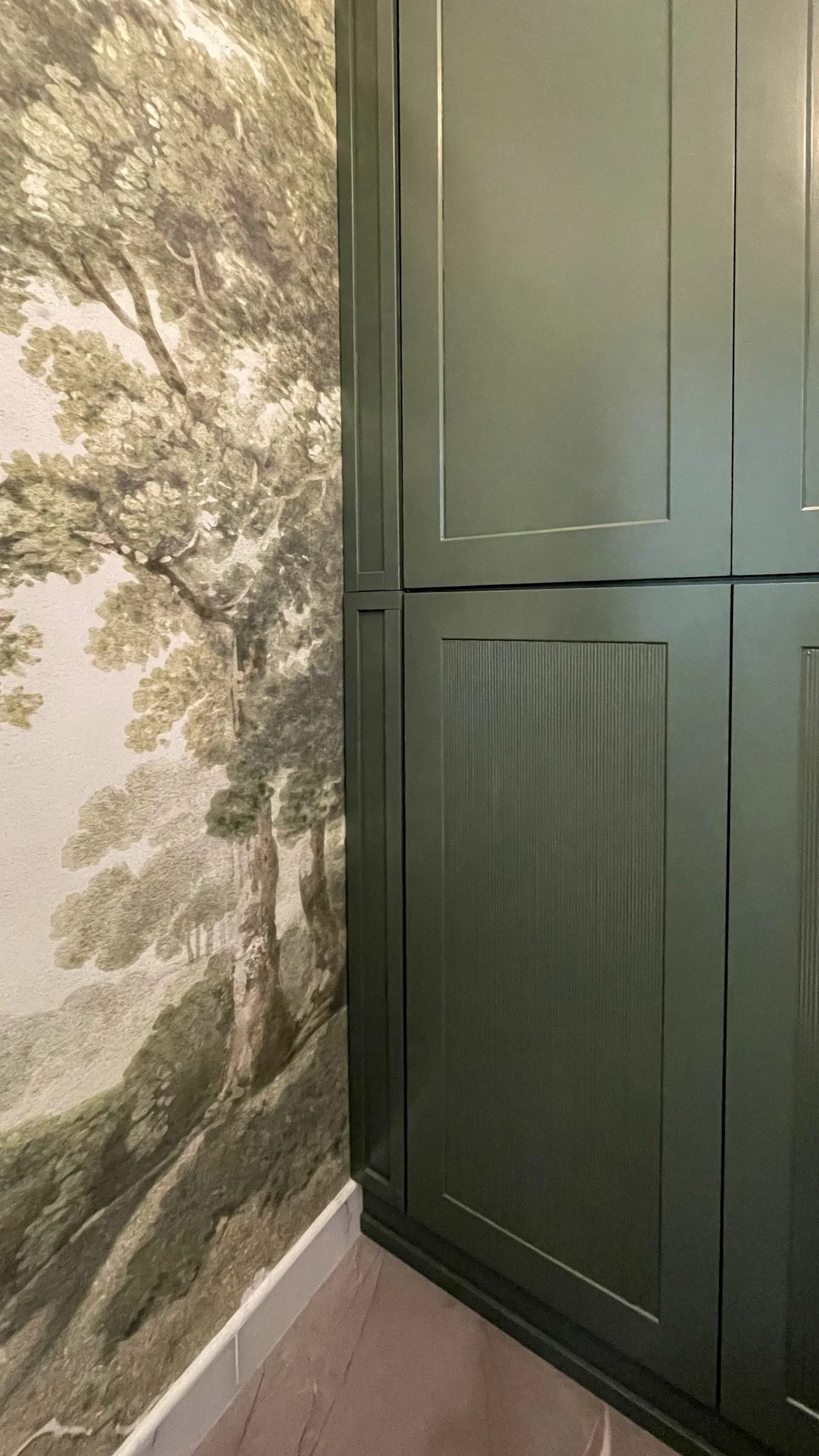
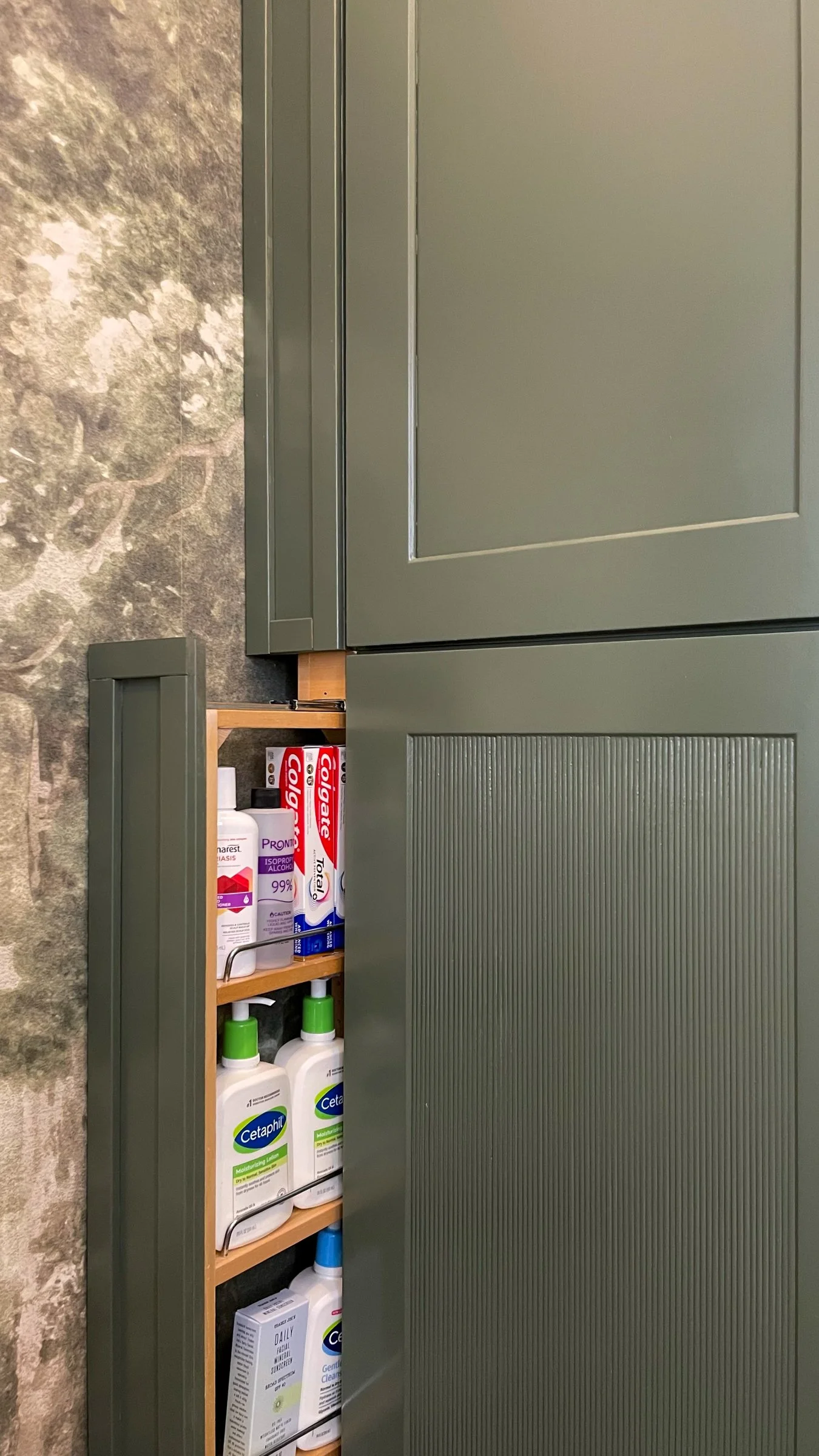
The Rev-A-Shelf pull-out transforms a narrow wall filler into hidden, functional storage.
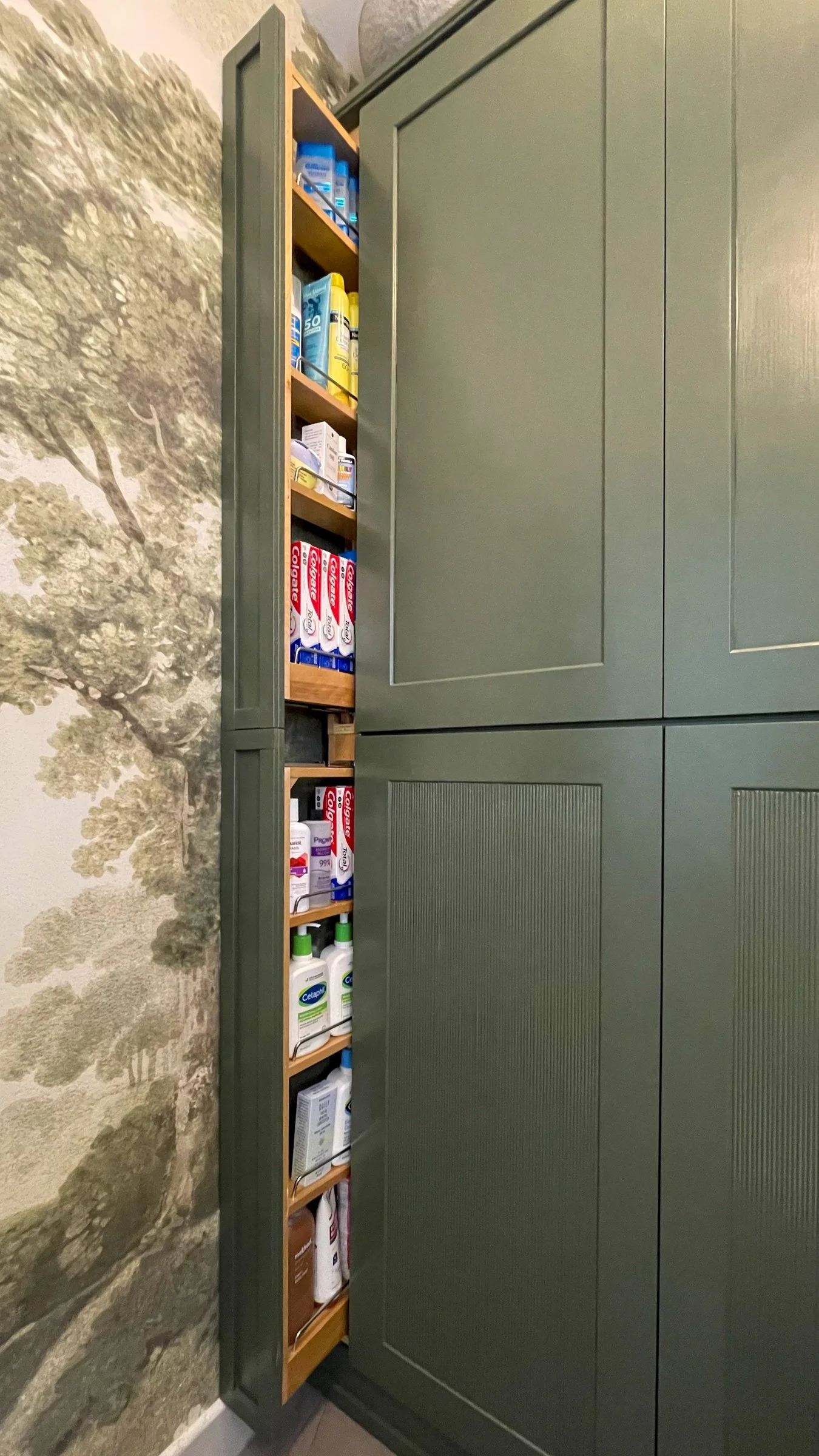
Proof that even a few forgotten inches can hold an entire household’s daily essentials.
This post contains affiliate links. I may earn a commission on purchases made through these links, at no additional cost to you.
After finishing the cabinetry in our powder bathroom, there was a 5-inch gap left beside the built-in. Typically, this gets closed off with a filler strip or decorative panel — functional, but ultimately wasted space. It felt like an opportunity to do more.
That’s when I found Rev-A-Shelf’s wall filler pullouts. They’re designed specifically for these narrow, in-between spaces, and because I used standard kitchen cabinetry for the built-in, the dimensions aligned almost perfectly. The right width, depth, and height without modification.
The unit arrived fully assembled, which made the installation surprisingly straightforward: slide it into place, secure it to the adjacent cabinet, and finish with trim. I matched the trim profile and paint to the existing cabinet doors so the pullout would disappear into the millwork rather than read as an add-on.
The result is storage integrated directly into the architecture of the room. Nothing sitting out. Nothing competing for attention visually. Just a quiet pull-out concealed behind a panel that feels original to the design.
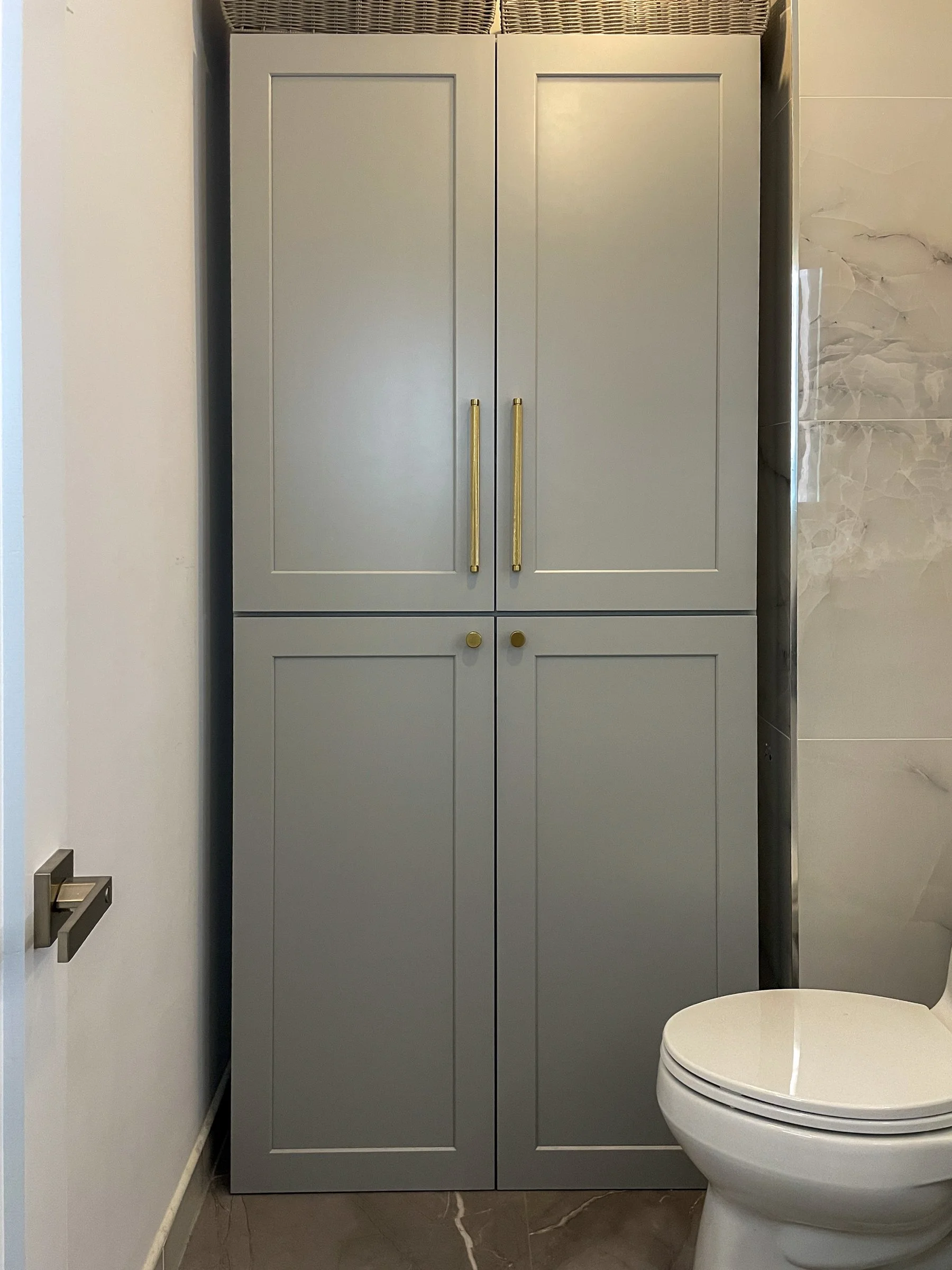
Powder Bathroom / BEFORE
This is where we started. Off-the-shelf cabinets to fill this niche in our powder bathroom. I added DIY cabinet doors to the existing cabinets and shifted the entire unit to the right to make space for the Rev-A-Shelf pullout wall filler.
The Project
1. Measure
Measure the opening carefully before searching for a solution. Rev-A-Shelf offers a wide range of sizes, and the goal is to find the right fit for the space.
2. Purchase
Choose the size recommended for your opening dimensions, but leave yourself tolerance. Walls are rarely perfectly straight, and a piece that fits “exactly” on paper often doesn’t fit in reality. Follow the minimum opening recommendations listed for each product.
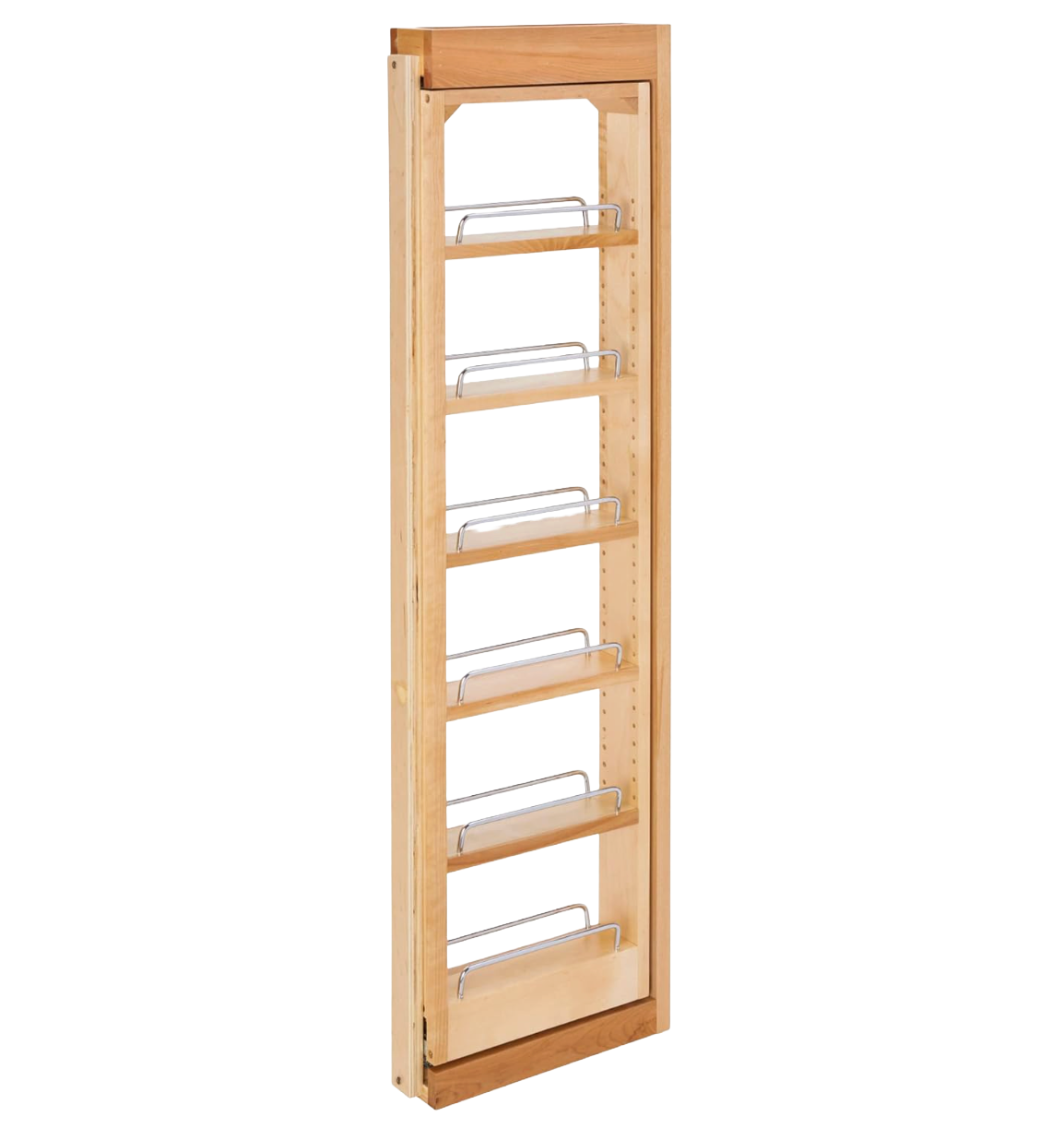
Rev-A-Shelf offers a wide range of sizes to suit your space. The unit is constructed from natural maple with chrome rails, adjustable shelving, and ball-bearing slides that give the pullout a smooth, substantial feel in use.
3. Install
The wall filler pullout arrives pre-assembled, which makes installation relatively simple. Slide it into the opening and secure it to the adjacent cabinet. Before screwing into place, make sure the base is level — if it isn't, wood shims will correct that. I also drilled a small pilot hole before driving each screw. It's a small step that prevents the wood from splitting and helps the screw enter cleanly. Finally, pay attention to screw length: long enough to secure the piece adequately, but short enough to stay fully encased in the panel. You don't want the screw to come through the other side.
4. Trim
To integrate the pullout visually, I matched the trim profile to the surrounding cabinet doors. Measure the depth of your existing door profile — mine is a shaker style — and find an MDF trim piece that matches. I found these trim pieces (foundation and frame) that aligned perfectly with my cabinet doors. For cutting, I used a circular saw, but a hand saw and miter box work just as well — the pieces are thin enough that it won't take much effort. Attach with wood glue, then prime, paint, and secure the panel with small screws.
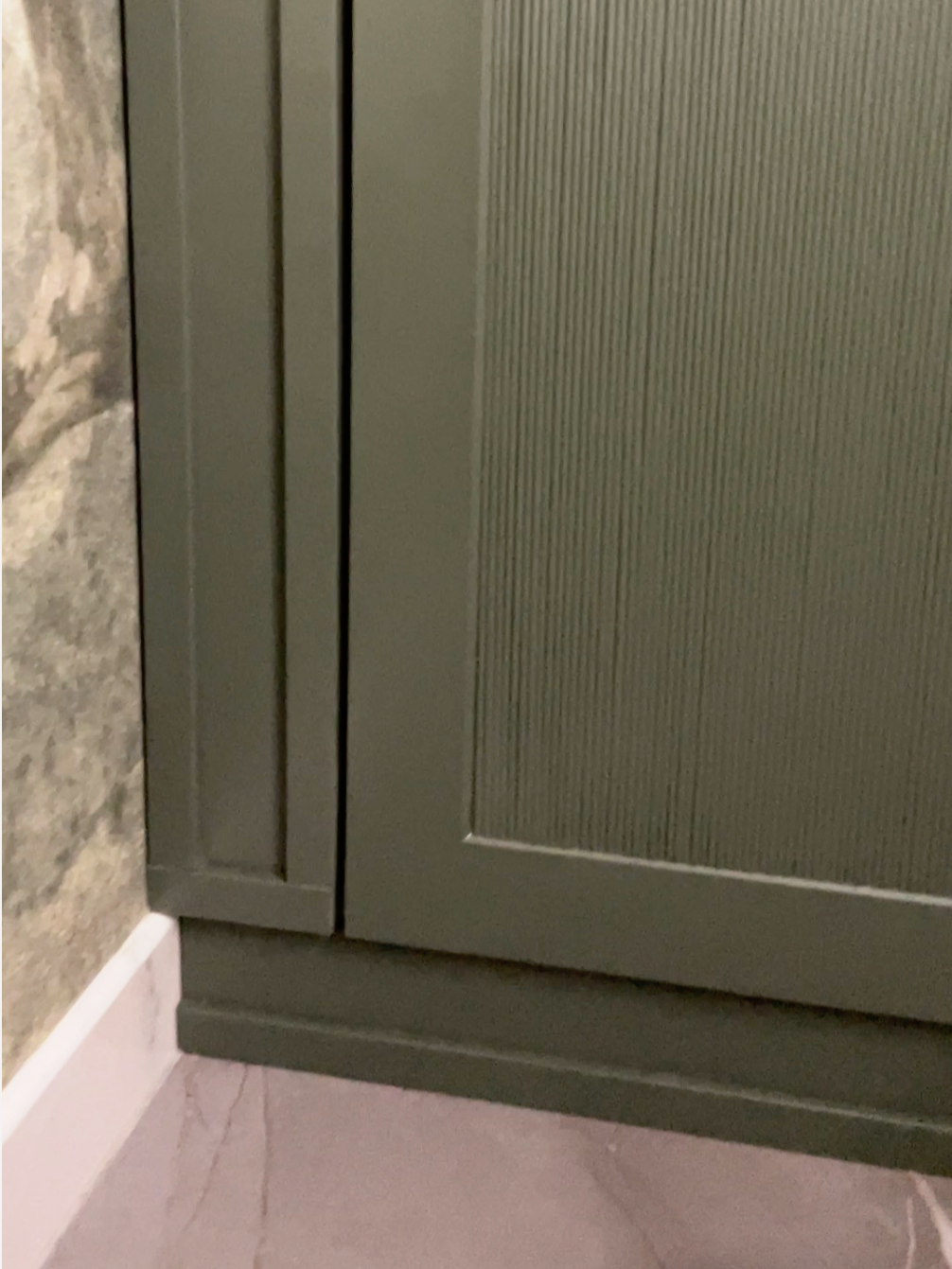
Trim & Paint
I created a front panel for the Rev-A-Shelf wall filler pullout using MDF panels and trim.
Color: Benjamin Moore Vintage Vogue, Satin Finish
The Result
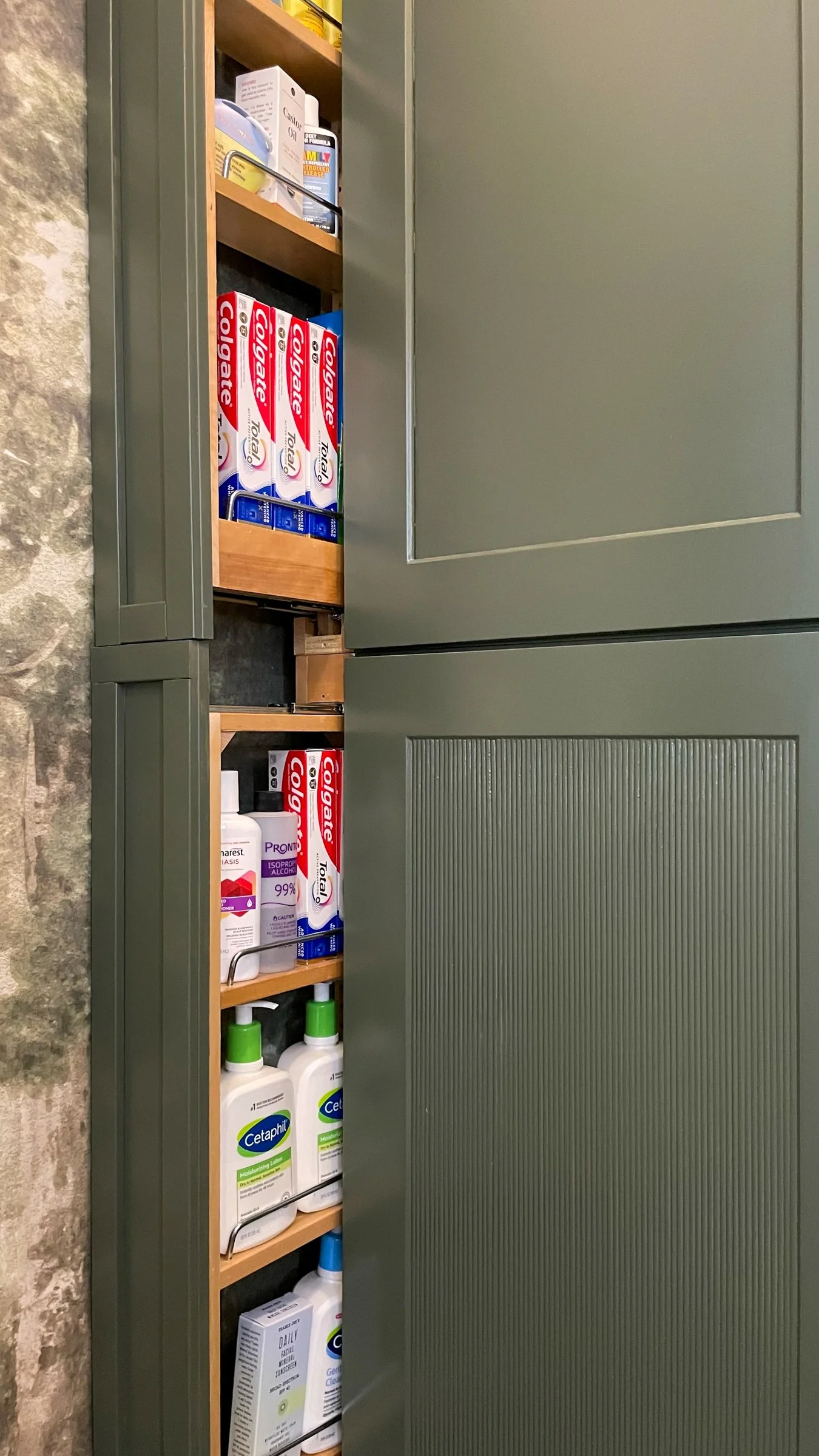
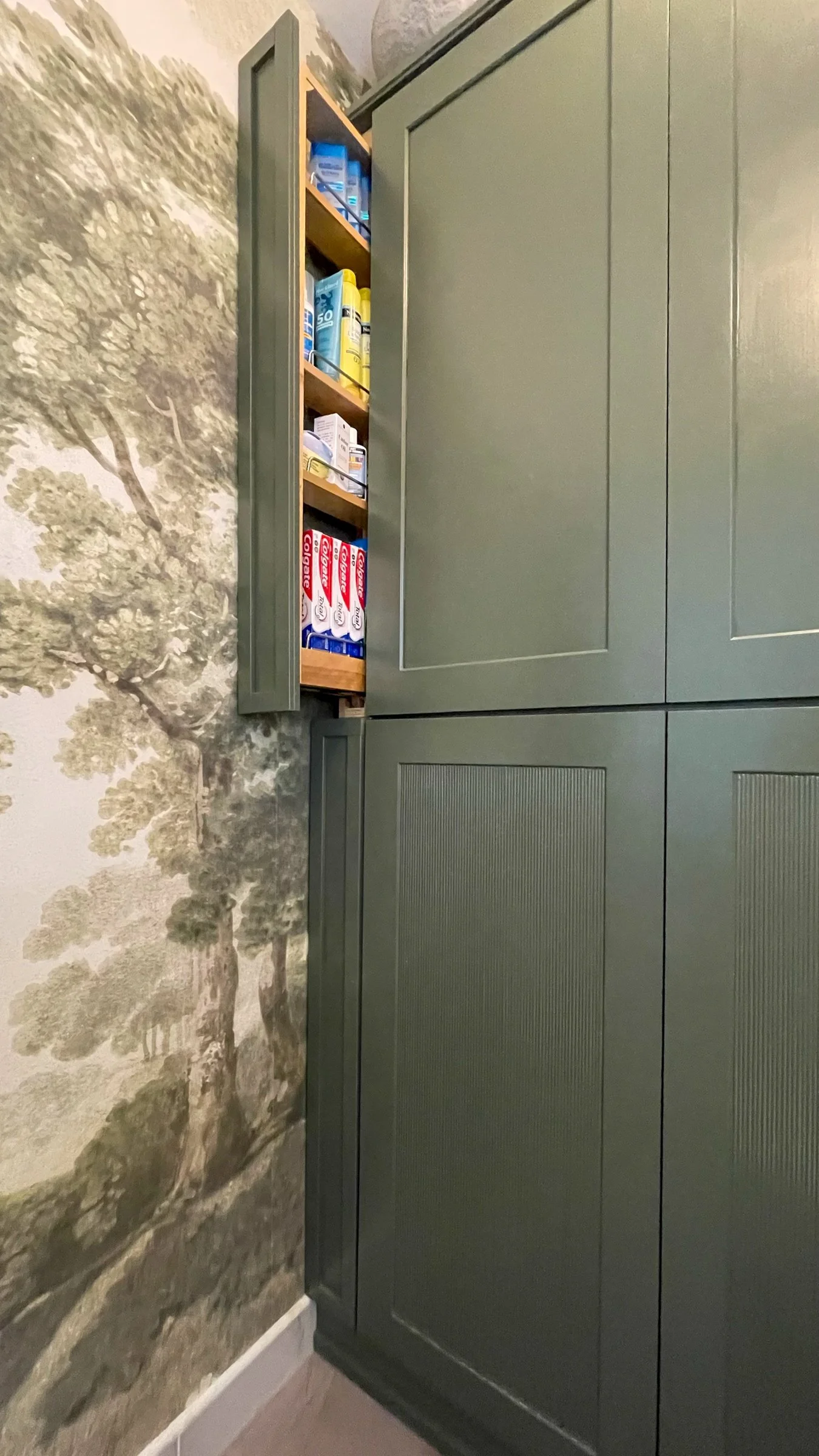
The pullout now stores the back stock of everyday essentials — sunscreen, deodorant, toothpaste, body wash — the things that need a place but don't need to be seen. Everything is within easy reach, and seeing what's running low makes restocking instinctive rather than something you remember too late.
From the outside, it reads as part of the cabinetry. Just another piece of filler trim — but this one is functional.
Resources