DIY Reeded Cabinet Doors Using Wooden Dowels
When I decided to paint the gray powder bath cabinets to complement the woodland wallpaper, I knew I wanted more than a simple color shift. The flat cabinet fronts needed dimension—something to break up the surface and add visual interest.
The shaker profile was already there, but I kept coming back to reeded texture. A practical upside: it would help disguise any imperfections from a less-than-perfect paint job.
Reeded panels are typically sold by the sheet, but I was after a much finer detail than what's readily available. The solution: individual wooden dowels, lined up to create the look of a reeded panel. I sourced the right size, then cut and glued each one—140 in total—into the inset of the doors.
I limited the project to the two lower cabinets—partly for feasibility, partly to see if the contrast between upper and lower doors would make the detail stand out more. The jury's still out on whether I'll repeat the process above.
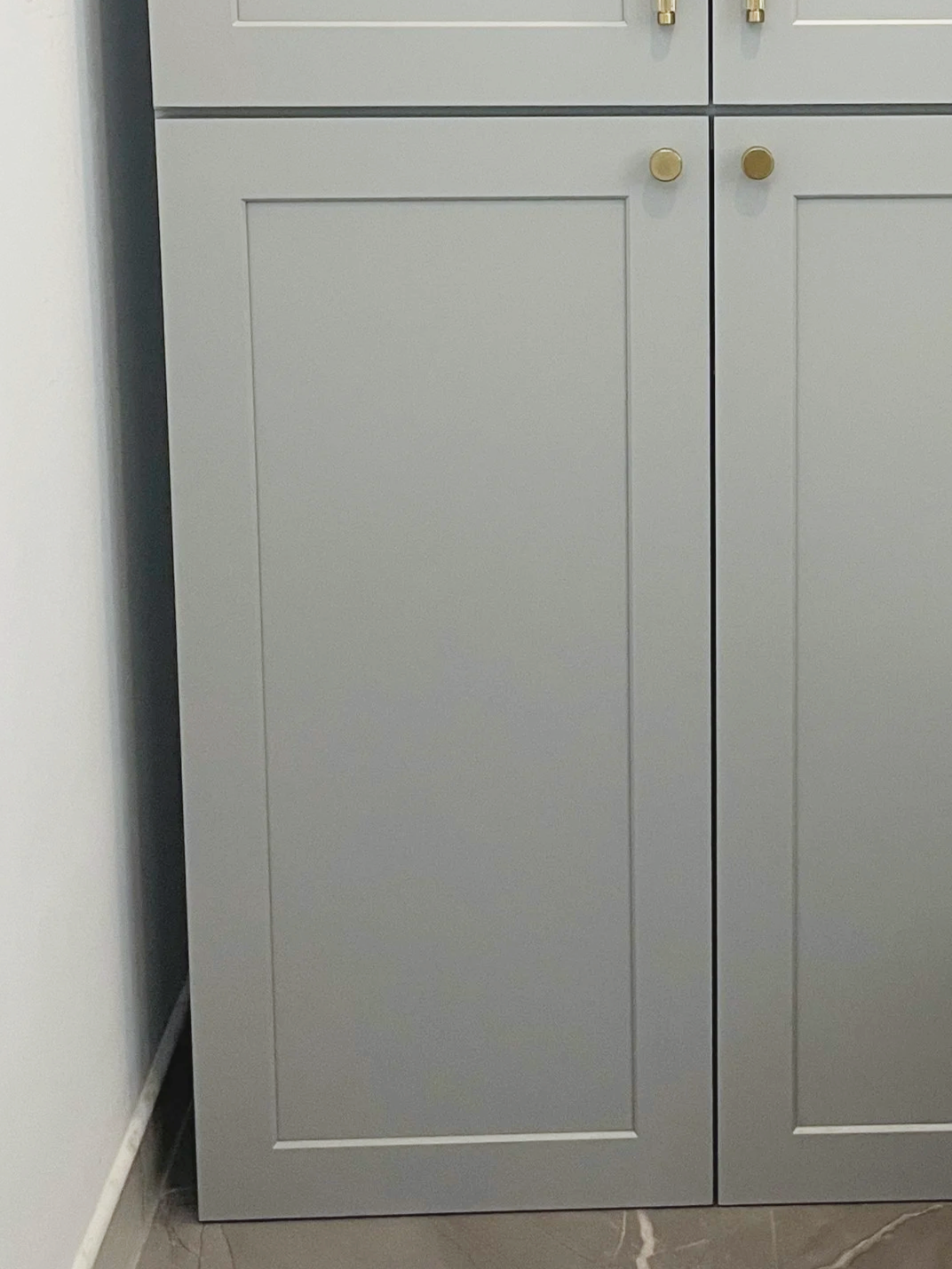
B E F O R E
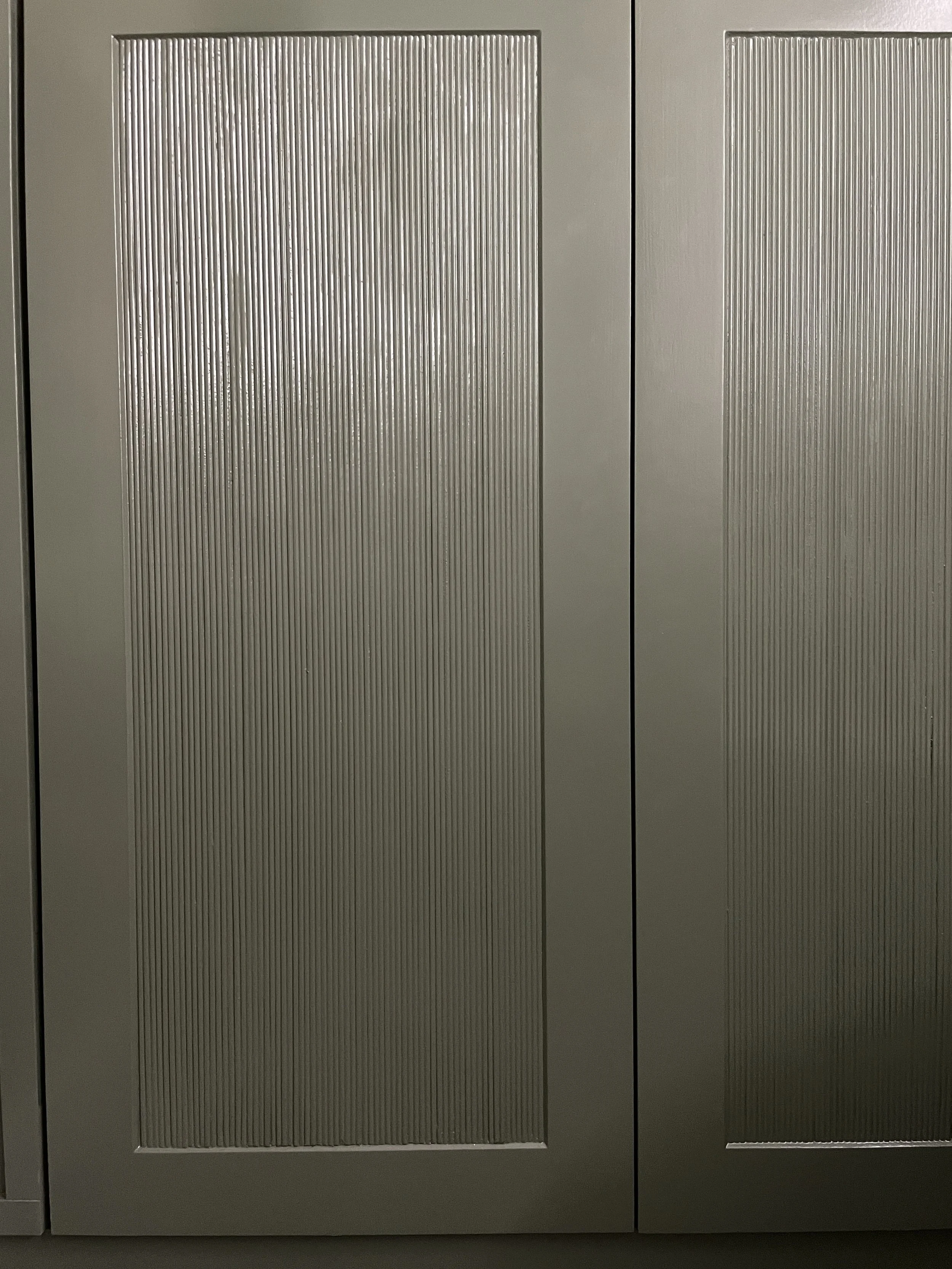
A F T E R
The Project
Measure + calculate. Measure the door inset and divide by the dowel width to determine quantity. Buy extra—you'll use them.
Cut to size. Trim each dowel to length. Miter shears can flatten the edge profile; a hand saw gave a cleaner, more precise cut.
Glue and clamp. Use wood glue to secure each dowel. Some will shift—clamp a flat board across the surface while drying to keep everything aligned.
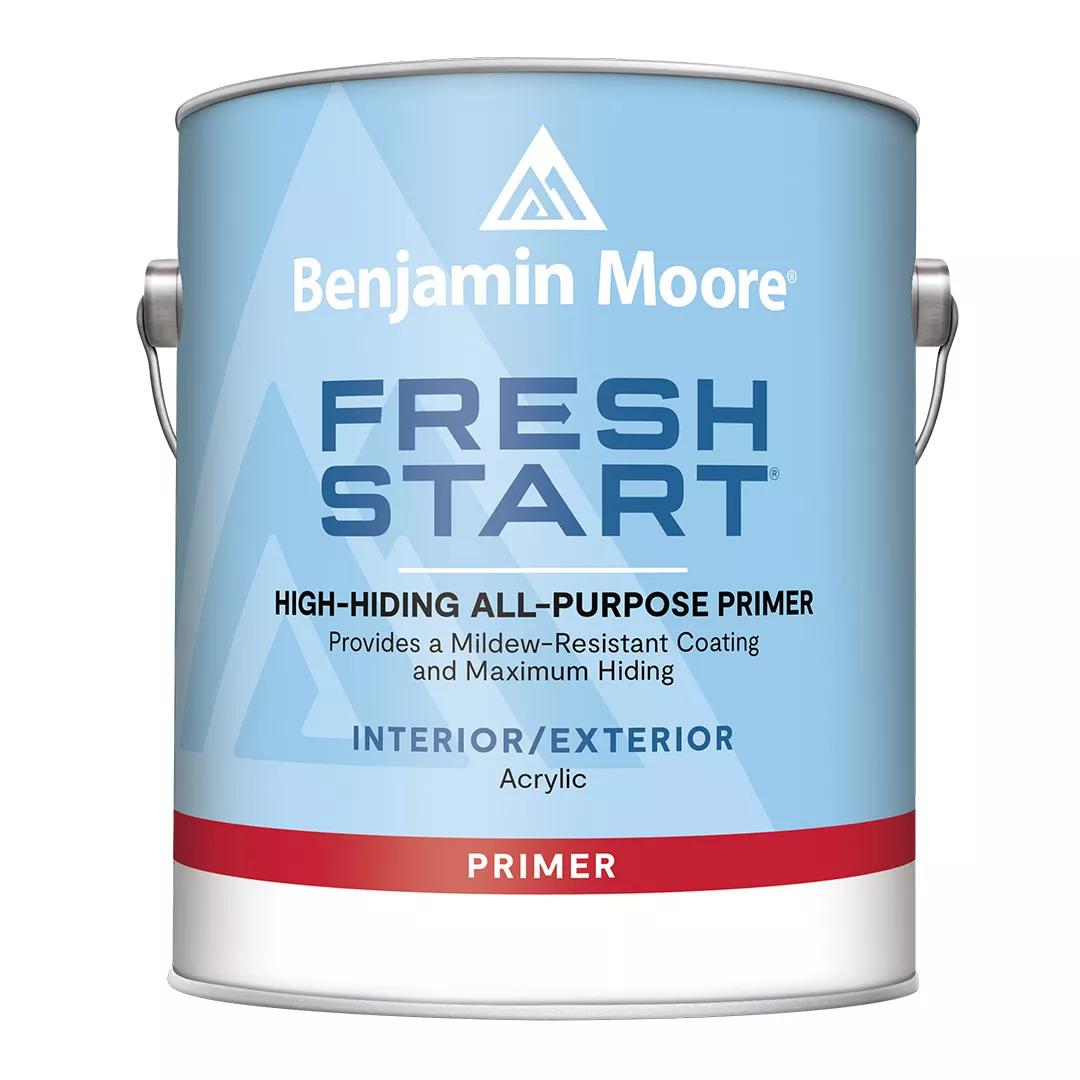
Prep properly. These doors had a factory finish, so I sanded and primed to ensure adhesion. Don't rush dry times—follow the paint specifications.
Sand + paint. Sand between coats for a smooth finish. I applied three coats total.
This post contains affiliate links. I may earn a commission on purchases made through these links, at no additional cost to you.
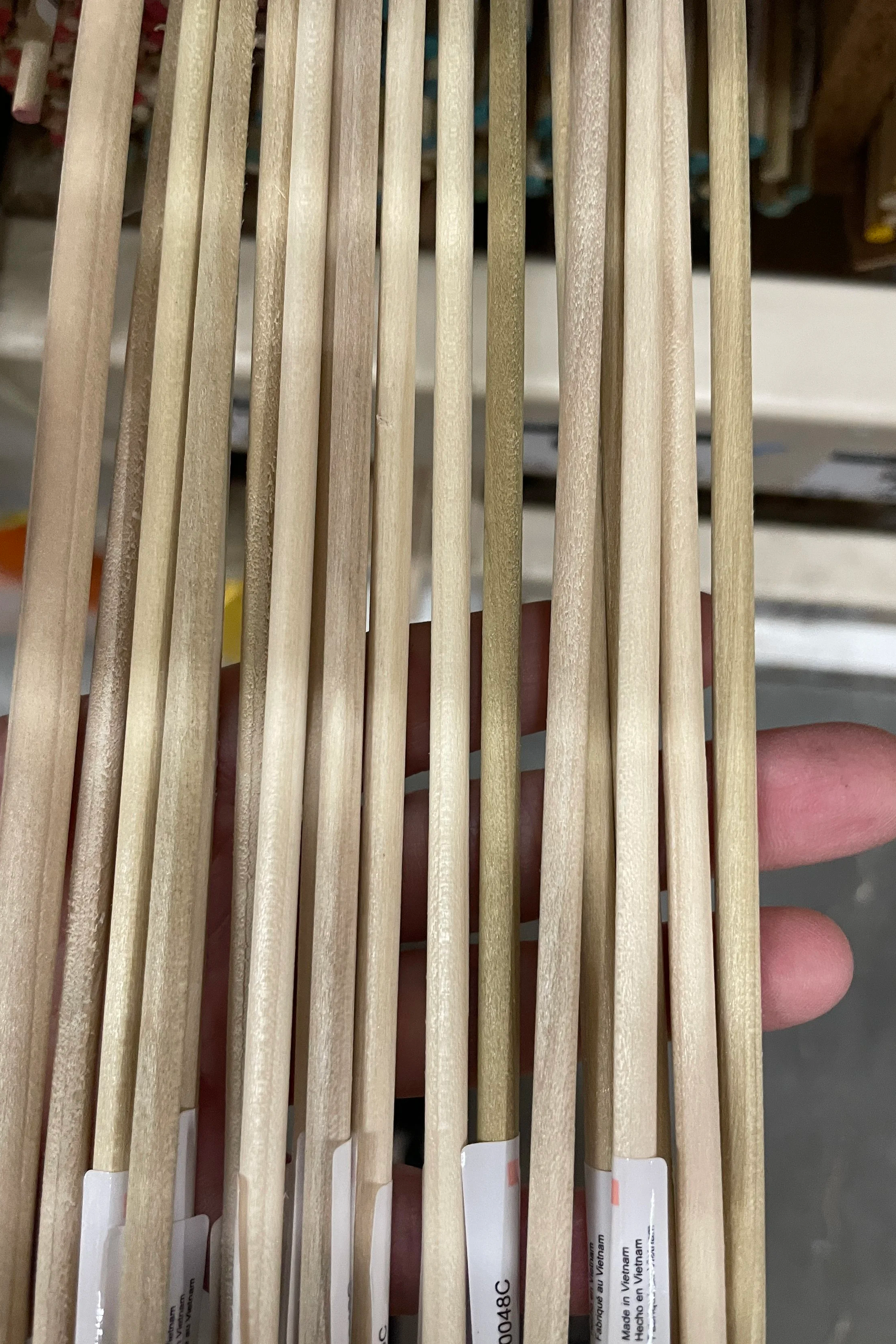
The wooden dowels I chose have a 0.1875” diameter.
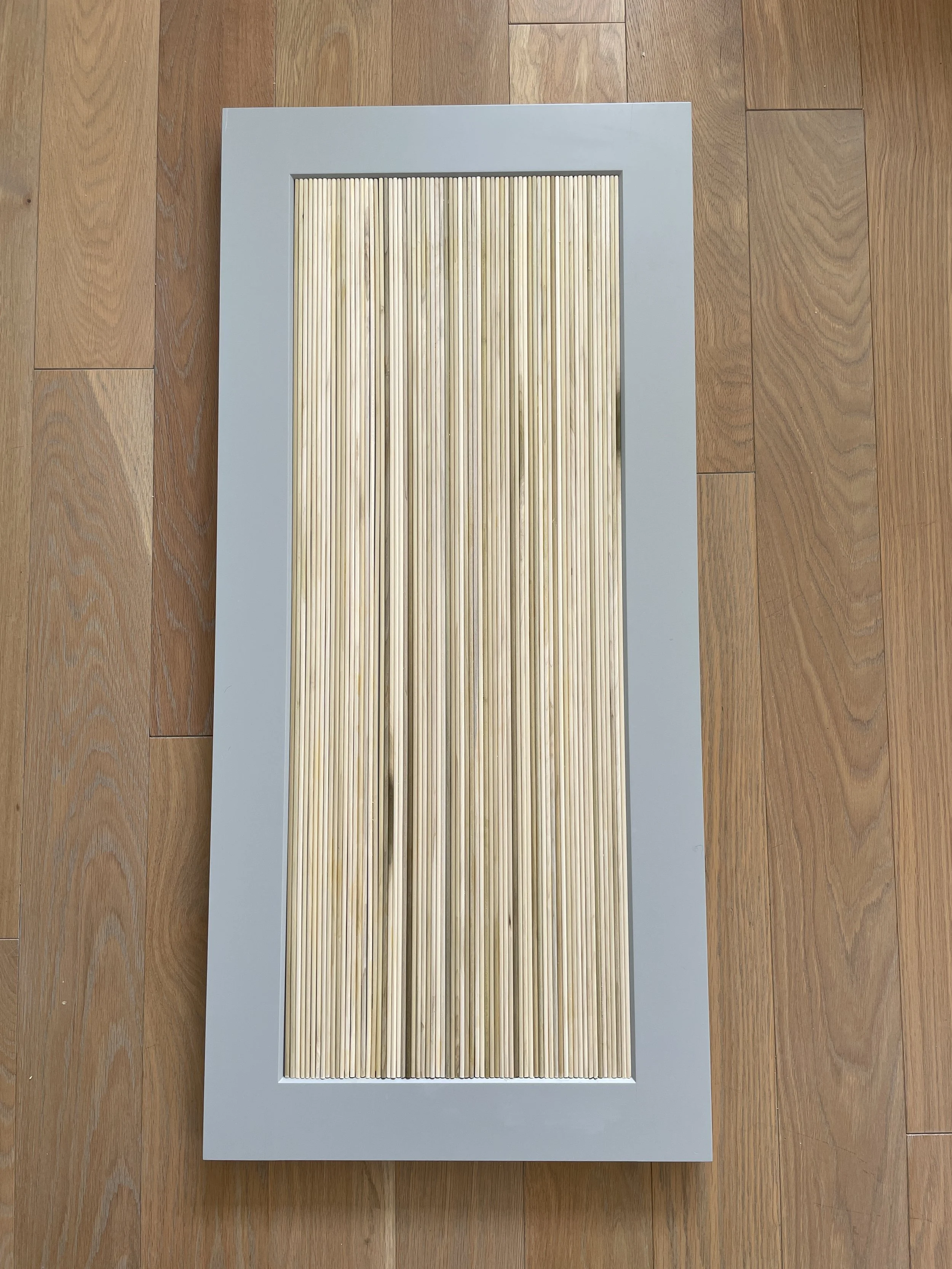
Clamp a flat wooden board on top of the wooden dowels as they dry to help keep everything in place.
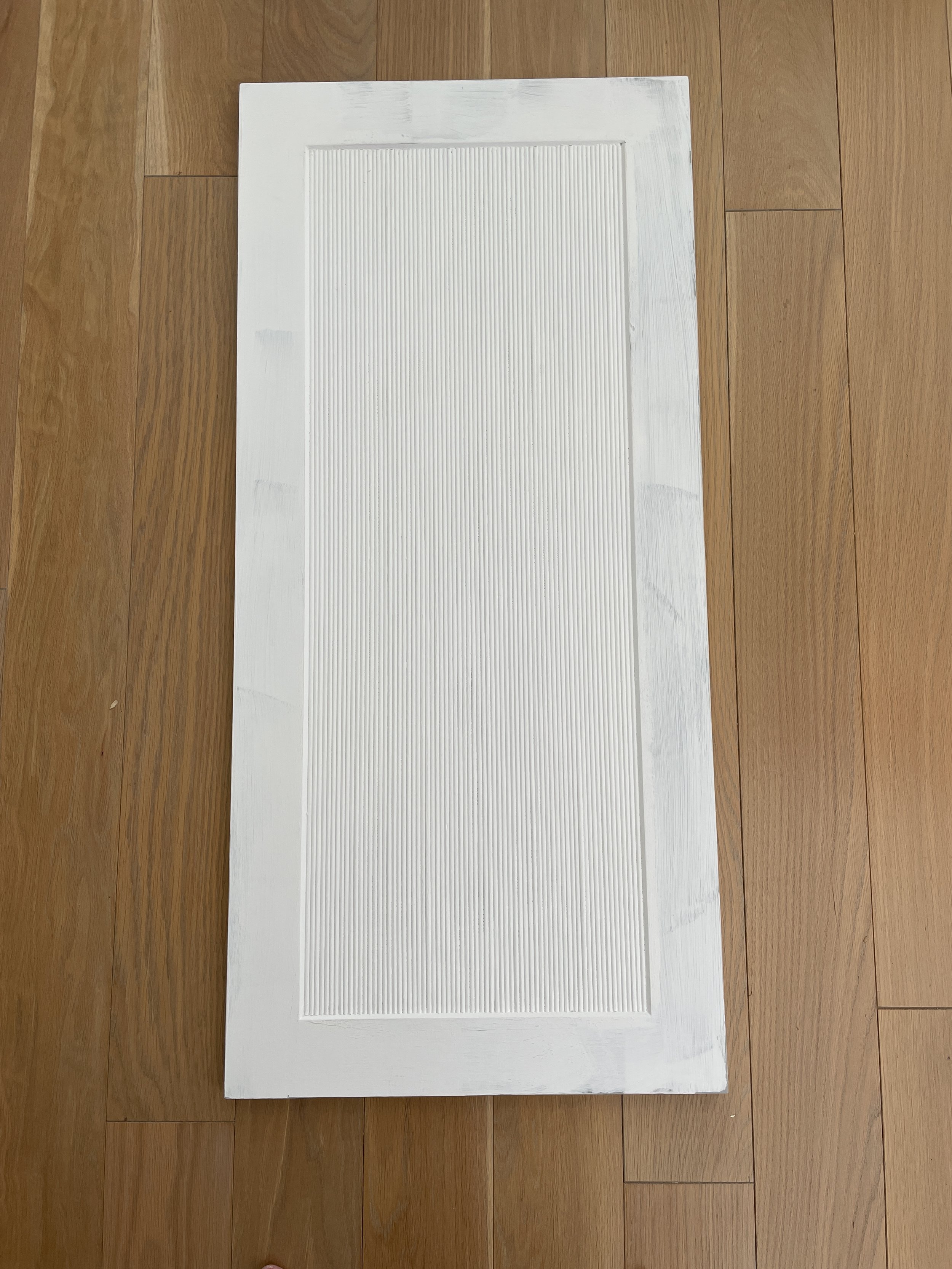
PREP MATTERS
Sanding and priming is non-negotiable. These doors came with a factory finish, so I had to create a surface the new paint could adhere to. Even paints with built-in primer need proper prep—especially on cabinetry.
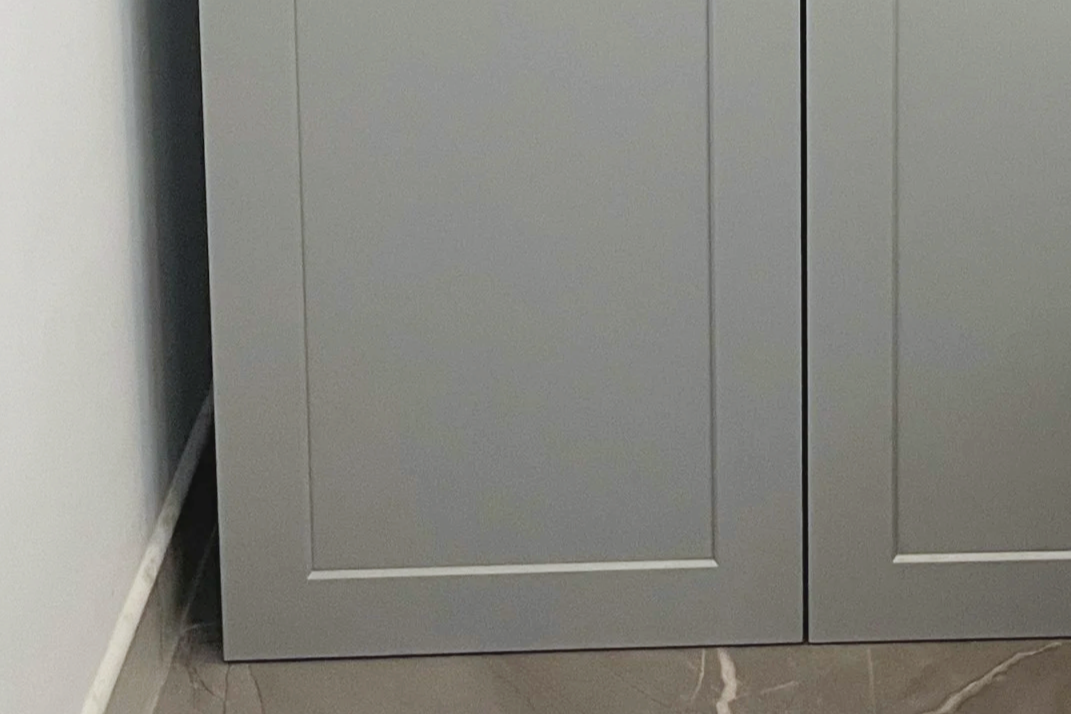
A NOTE ON THE CABINET BASE
These cabinets are actually two wall units stacked together, so they lacked the built-in base of a standard base cabinet. Initially, I set them directly on the floor—functional, but not convincing.
In the second iteration, I built a base (see below). It now reads as a single, built-in.
The Result
The reeded texture introduces depth and subtle movement, catching the light without overwhelming the space. The green draws from the mural, adding warmth and a welcome departure from gray and white. Powder rooms are ideal for experimenting with texture and color—small enough to take risks without visual overload.
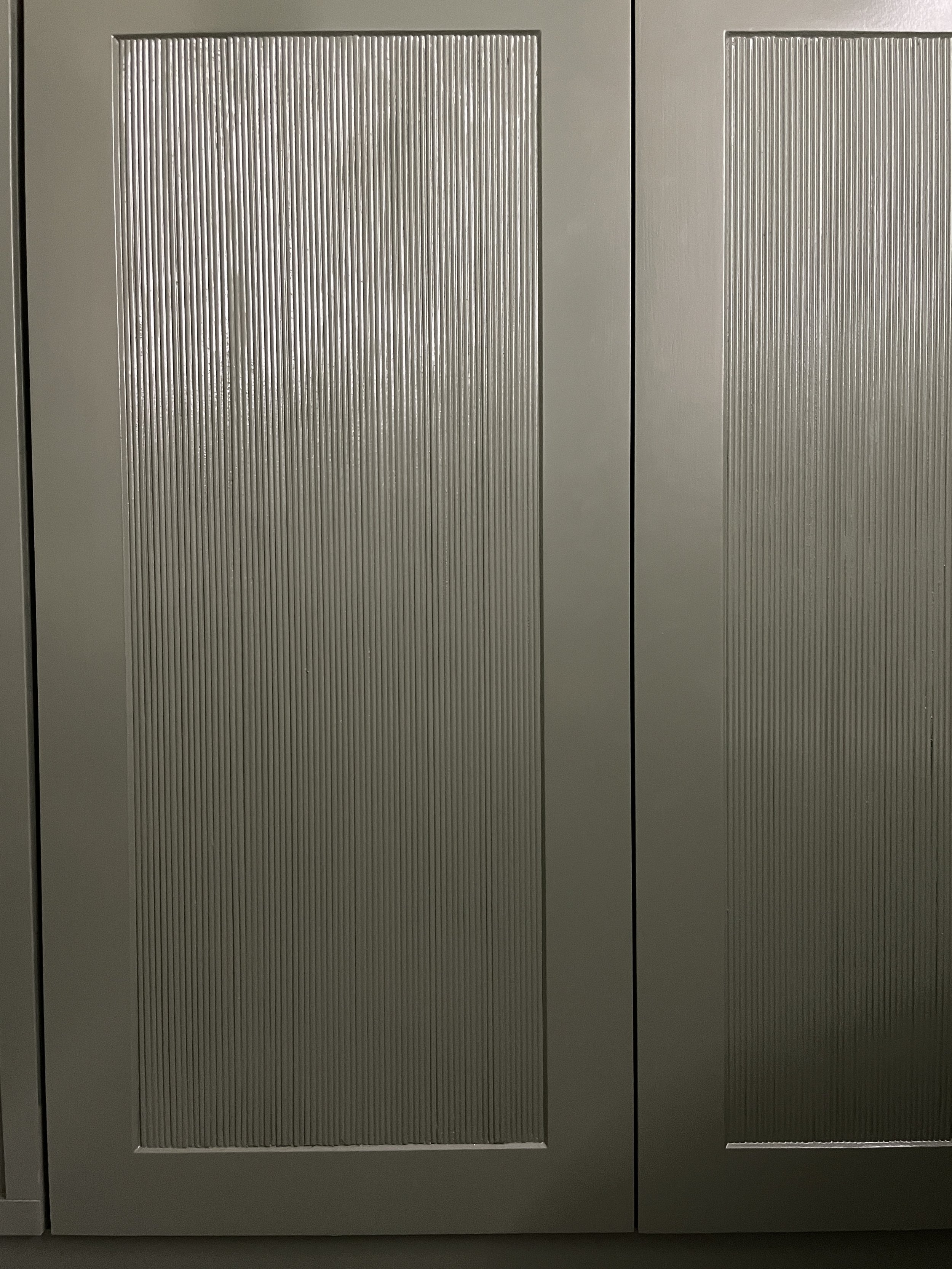
Color: Benjamin Moore Vintage Vogue, Satin Finish